
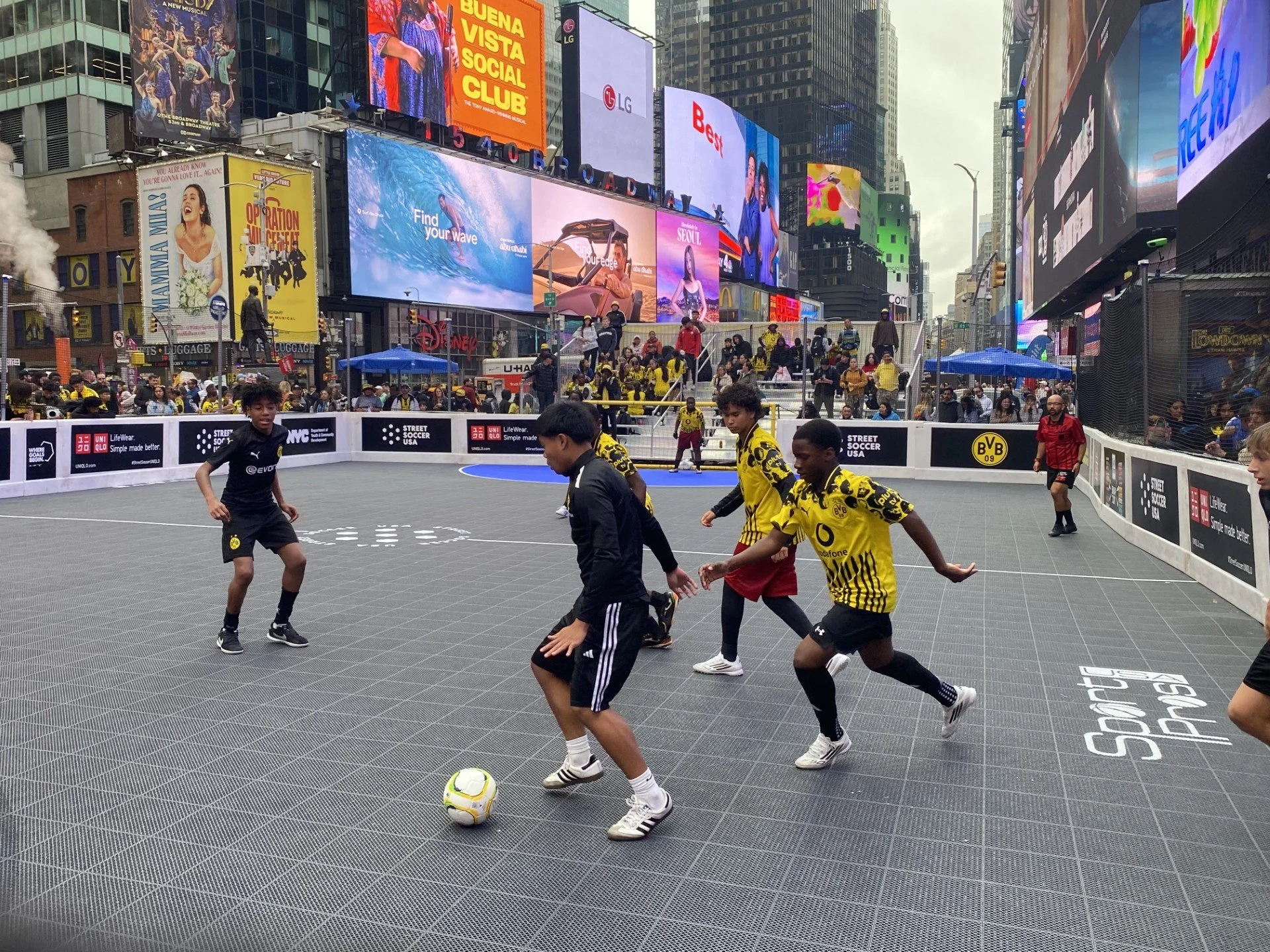
State of Soccer New York City/North Jersey was released April 21, 2026 as the Aspen Institute’s 17th community report. It’s a first-of-its-kind analysis of the region’s youth soccer ecosystem commissioned by the Laurie M. Tisch Illumination Fund as part of its Play to Thrive initiative.
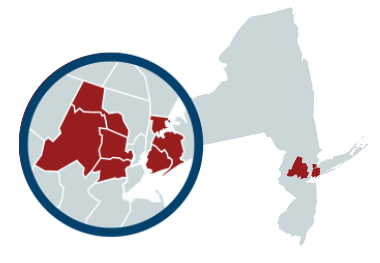

The report examines barriers to participation and identifies opportunities to expand access for children across the region ahead of the 2026 FIFA Men’s World Cup, which will hold its final in New Jersey on July 19, 2026. At a moment of heightened national attention on the sport, the report uncovers a unique opportunity to rebuild youth soccer as a more equitable, accessible and youth-centered system.
Project Play interviewed local leaders and policymakers, held a regional community summit, conducted focus groups with children, parents, and coaches, engaged in a data analysis of field availability versus demand, and surveyed nearly 700 youth soccer players. The survey lets children share their soccer experiences directly, so local leaders can improve programs based on their feedback.
KEY FINDINGS
The “Fun Gap”:
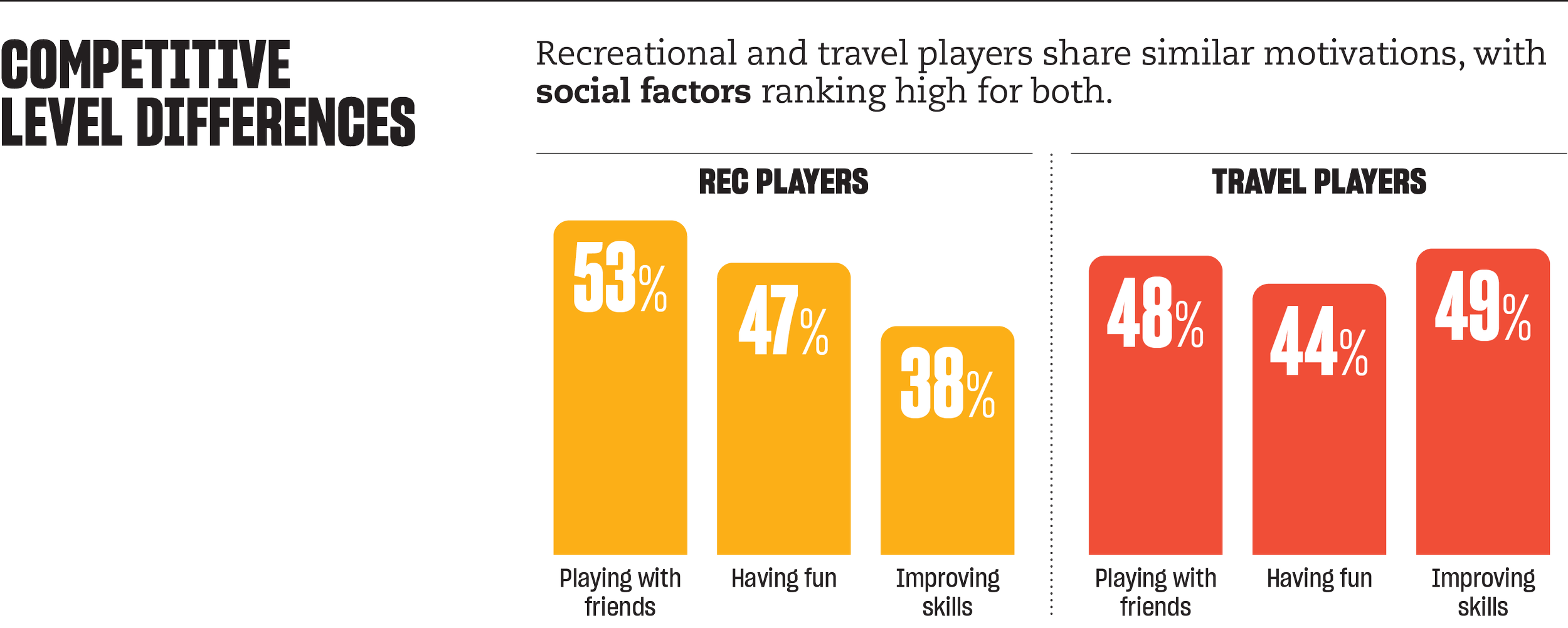
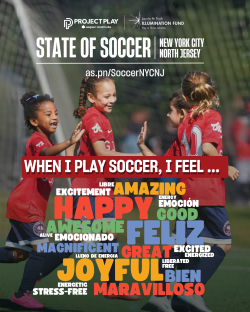
Children play soccer primarily for social reasons, valuing friends (48%), fun (46%), and skill-building (45%) over winning (23%) or scholarships (13%). However, the current system is driven almost entirely by the chase for scarce college or professional playing opportunities, often overlooking the sport’s broader benefits attached to a child’s physical, mental and social well-being.
Cost as a Primary Barrier:
Nearly one-third of players (32%) cite expensive team fees as a major issue, a figure that climbs to 41% for children from low-income households. Although community-based organizations and public agencies are working to bridge the gap, limited resources continue to sideline kids from the game.
"Soccer Deserts" and Infrastructure Shortages:
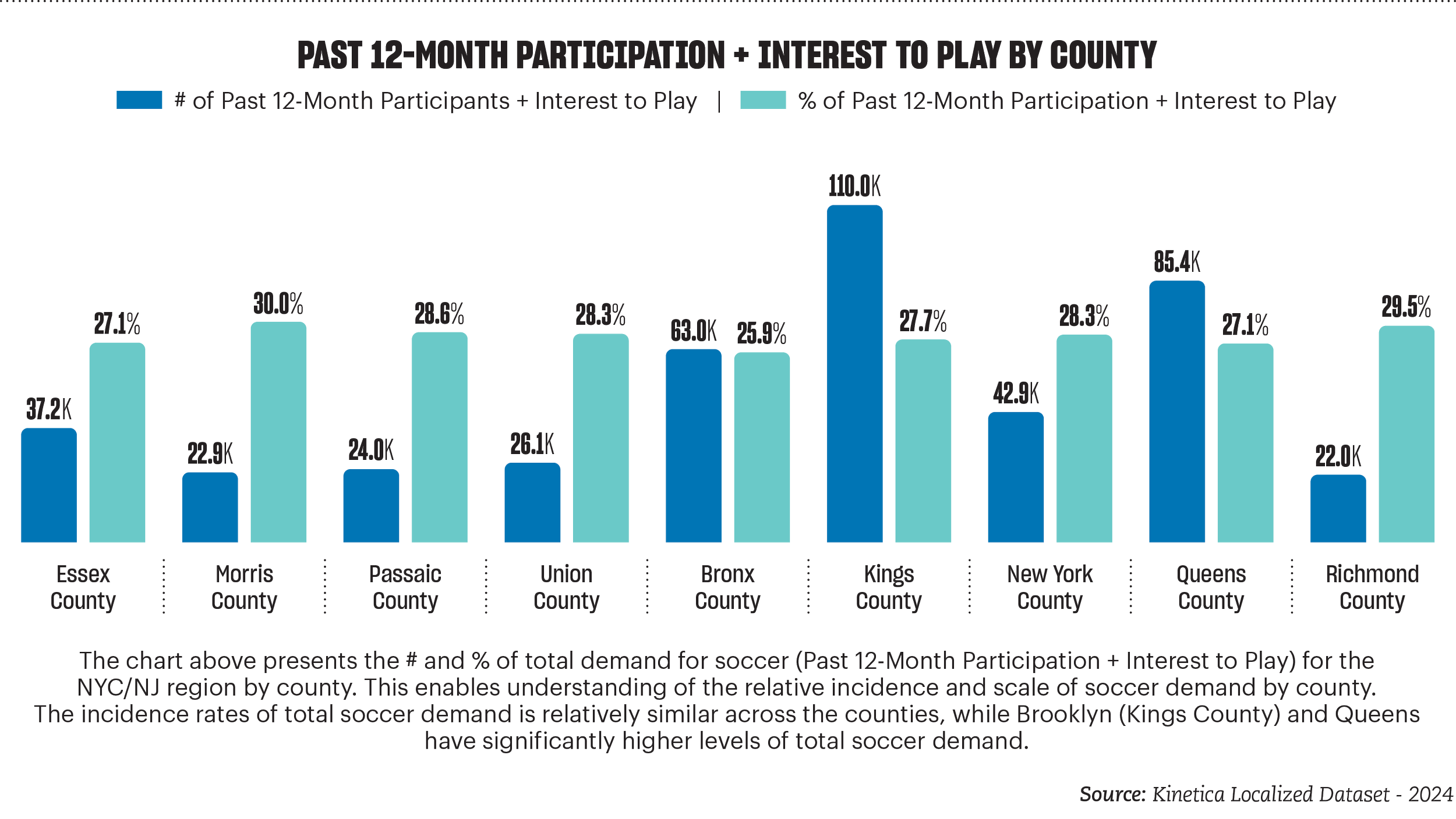
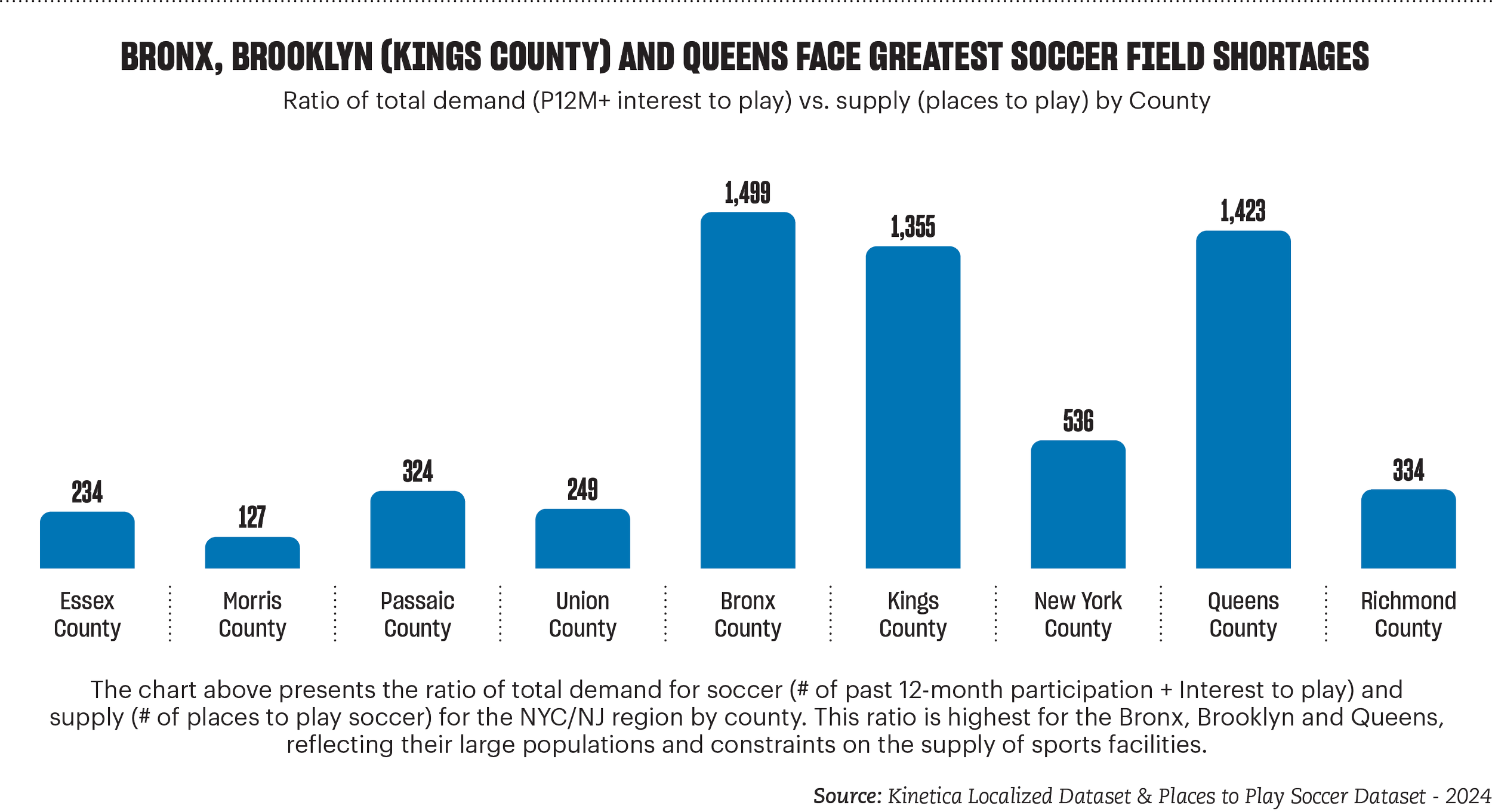
Demand for the sport vastly outpaces the supply of functional playing spaces, particularly in dense urban areas like the Bronx, Brooklyn, Queens and Newark.
The Transportation "Hidden Tax":
Access to play is often determined by car ownership. While 86% of high-income players are driven to practice, only 21% of low-income players have the same reliable access.
Gender Disparity in Participation:
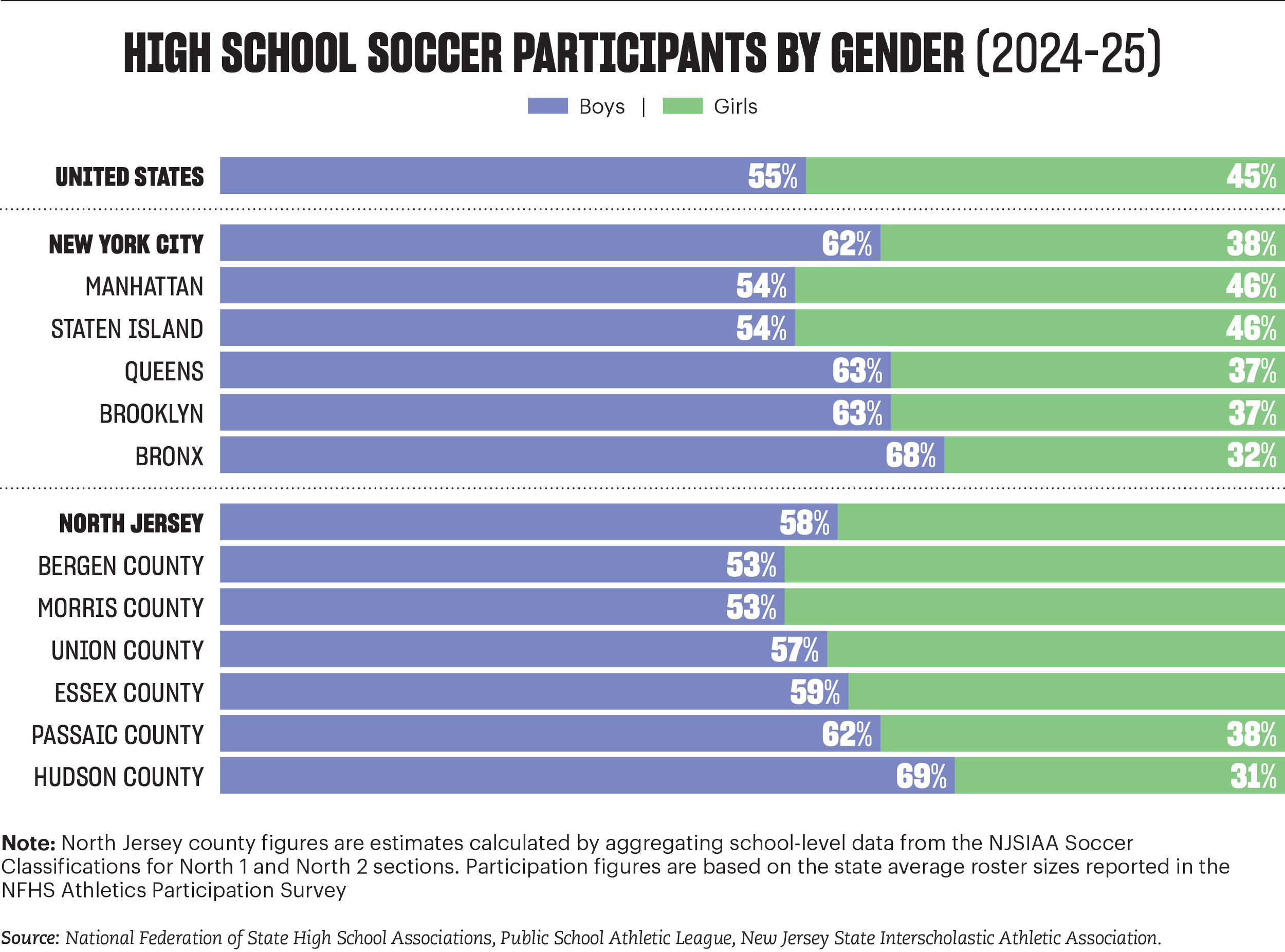
Girls represent just 38% of high school players in New York City and 42% in North Jersey — both below the 45% national average. The report finds that many girls feel intimidated or ignored in mixed-gender coed settings, leading to earlier dropout rates.
The Decline of Pickup Play:
Historically vital to the region’s soccer culture, unprogrammed soccer is vanishing. As children rarely organize their own games, the sport is being pushed further into rigid, expensive club environments.
Commercialization and Overtraining:
The drive for elite performance has led to excessive specialized play at young ages. This overtraining contributes to burnout and a surge in serious injuries, such as ACL tears, which disproportionately affect female athletes.
RECCOMENDATIONS

Improving quality soccer access for NYC/NJ youth requires a multifaceted approach tailored to specific community needs. The 2026 World Cup offers a unique catalyst for leagues, policymakers, coaches, philanthropists and private partners to collaboratively address systemic challenges. The report’s recommendations include
1. Reduce cost barriers:
Soccer is one of the most affordable sports to play around the world. In America, “pay-to-play” clubs dominate the system. It’s an unchecked industry that exists less to develop players and more to make money for individuals. Too many children from lower-income backgrounds get left behind.
Bring a new system into under-resourced communities
Prioritize support for recreational providers
Create transparency and oversight of youth sports organizations
2. Invest in soccer infrastructure:
Community members want the World Cup to leave behind tangible assets in underserved urban areas, especially high-quality pitches and facilities. This includes not just the construction of new fields, but the improvement of existing ones (such as adding lighting) to increase playable hours for the community. Transportation barriers mean soccer must be more accessible in the places where children live.
Scale the public-private partnership model for small-sided soccer spaces
Implement shared-used agreements for schoolyards
Direct support for “soccer deserts”
Build up futsal as a viable alternative given field scarcity
3. Train More Coaches Beyond Soccer:
One of soccer’s greatest strengths in the NYC/ North Jersey region is its role within a larger youth development ecosystem. Soccer can help children improve their physical and mental health, find safe places within their community, and develop confidence and self-esteem that supports academic improvement. But many coaches told us they struggle knowing how to work with children to unleash these benefits.
Prioritize youth development training
Invest in ongoing coach support
Make coach education easier for volunteers
4. Strengthen girls’ retention strategies:
The legacy of the 2026 Men’s World Cup can’t simply be about males. Females love soccer too. Not to mention, the 2031 Women’s World Cup will likely stage games at MetLife Stadium. Yet too many girls in the NYC region stop playing soccer sooner than boys.
Mandate girls-focused program design
Build a female coaching fellowship
Deploy resources for mental resilience and body confidence
Emphasize knee injury prevention
5. Shift soccer culturally from pressure to play:
Soccer leaders desperately want to reclaim the joy in soccer. The sport has become overly commercialized, increasing the pressure on kids to perform. What if the legacy of the World Cup for kids is pretty simple — return fun to more kids so soccer becomes a lifelong pastime rather than a stressful elite pursuit?
Launch a “Summer of Street Soccer” campaign
Adopt a community wellness scoreboard for funders
Apply Norway’s development model to U.S. soccer by anchoring it in joy and lifelong participation
TURNING DATA INTO ACTION
The report was commissioned through the Illumination Fund’s Play to Thrive initiative, a multiyear $10 million investment to ensure every child has the opportunity to experience the benefits of sport. Since its 2025 launch, Play to Thrive has supported a series of soccer-focused initiatives across New York and New Jersey, each addressing barriers the report identifies, from girls' participation gaps to a lack of accessible, safe places to play:
Keep Her in the Game, a Gotham FC initiative in partnership with Girls Leadership, aimed at retaining girls in soccer while building confidence and voice. Now in its second year, the program has expanded with support from the presenting partner, Dove.
Elevate Play, a Gotham FC initiative driven by Playworks NY/NJ that brings positive, structured play to school recess and connects school communities to live soccer experiences. The program has expanded with support from Bank of America.
Street Soccer USA, which is developing a new community soccer park and learning center in Queens, purpose-built for youth development and focused on young people facing poverty and housing instability.
Also building on the report’s insights, the Soccer Forward Foundation (the U.S. Soccer Federation’s legacy and social impact arm) is launching a multi-sector collective in the South Bronx, using soccer as a tool to address critical social challenges. The initiative in the South Bronx is part of Soccer Forward Communities, which is U.S. Soccer’s model for investing and support on a hyper-local level.
Soccer Forward Communities will support a collective group of soccer for good organizations, including DREAM Charter Schools, South Bronx United, Street Soccer USA and The Sports Creative, over the next four years to increase the number of safe, inclusive and accessible soccer spaces, integrate the sport into more schools, and train hundreds of coaches to deliver positive health and educational outcomes across the community. Soccer Forward Communities will also work to continue to respond to the report's findings in real time.
media coverage
‘Soccer Deserts’ in New York keep children from playing (New York Times)
Use World Cup to expand play for our kids (New York Daily News)
Can World Cup change how Americans look at youth soccer? (USA Today)
Kira Pritchard and Jon Solomon on the future of soccer in the U.S. (The Profluence Podcast)
The state of American youth soccer: Growing faster than ever, but can anyone keep up? (Goal.com)
The Bronx faces severe youth soccer access gap despite high demand (The Bronx Daily)
STATE OF SOCCER SUMMIT
In October 2025, the Aspen Institute hosted a local soccer summit in New York City. More than 100 soccer leaders attended and helped shape the findings in our final report. Thank you to everyone who participated and contributed to the State of Soccer Summit. See the full agenda here.
contact information
For more information about the State of Play Soccer New York City/North Jersey project, email Jon Solomon at jon.solomon@aspeninstitute.org or Ruby Avila at ruby.avila@aspeninstitute.org.
The Aspen Institute thanks our partner the Laurie M. Tisch Illumination Fund for its support of this report.
IN PARTNERSHIP WITH