
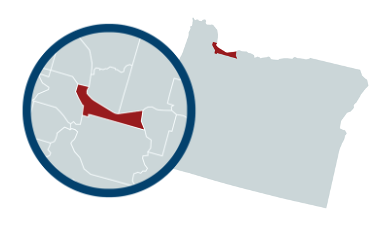
State of Play Portland was released in October 2026 as the Aspen Institute’s 18th community report. The report analyzes the barriers and opportunities for more children in Portland, Oregon, to play sports and move their bodies, given the physical, social, emotional and academic benefits of physical activity.
State of Play Portland finds that play is ingrained in Portland’s local culture. A vast network of community programs, schools and youth sports providers serves the region’s children with sports and recreational activities that also leverage play to feed, educate, mentor and protect underserved youth. By integrating these services, Portland utilizes sports as a holistic tool for child well-being, creating a powerful mechanism to inspire and support the next generation. However, access to quality sports and play can be skewed by household income, gender and race/ethnicity.
To understand Portland children’s experiences with play, the Aspen Institute surveyed more than 1,600 youth; analyzed sports participation “deserts” in the city through predictive analysis; held focus group discussions with youth, parents and coaches; interviewed key stakeholders and community members; and analyzed existing research.
KEY FINDINGS
WHY KIDS PLAY
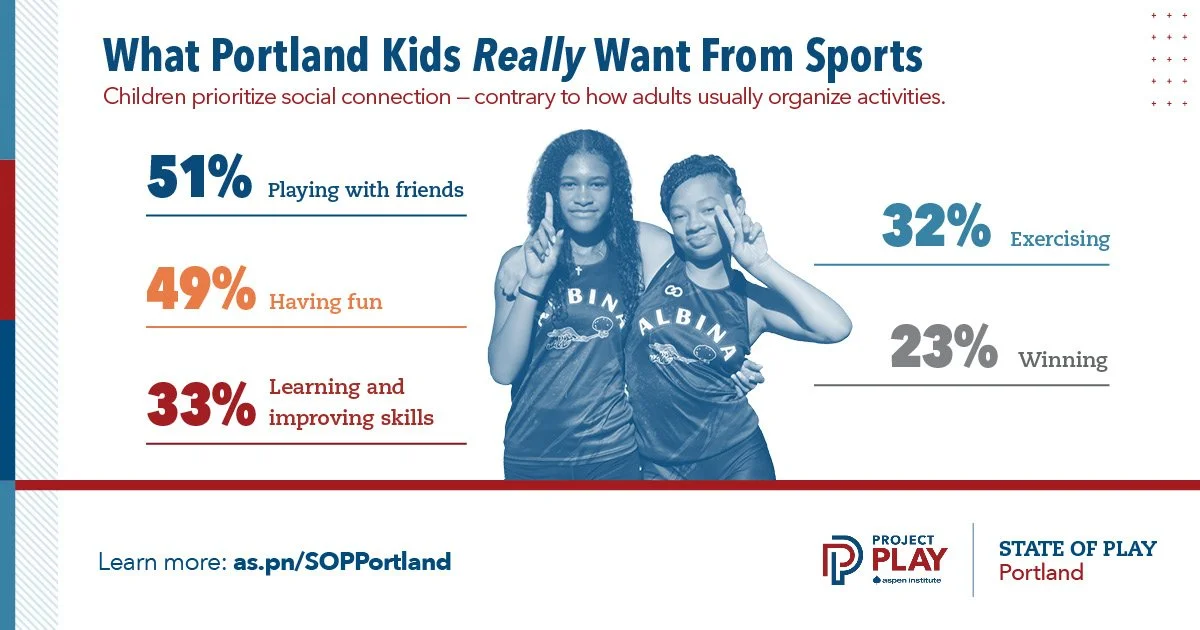
Children play sports to have fun and build friendships. Having fun and playing with friends are the top reasons local youth participate in sports, far outranking winning games or chasing college scholarships. Yet the region’s fragmented youth sports system is largely structured by adults around competition and leaves many youth behind, especially those from lower-income homes.

WHERE KIDS PLAY
Sports participation varies by community. Portland children play sports at the lowest rates in District 1 in the eastern part of the city, home to Portland’s highest percentage of youth and lowest household incomes, according to predictive analysis by the Aspen Institute’s partner Kinetica.
Park maintenance, field space and permitting access are challenges for sports programming. High-revenue sports organizations navigate this system more effectively, demonstrated by field usage at Delta Park, the city’s most in-demand outdoor venue. Three of the top four soccer clubs that used Delta Park the most in 2024 reported annual revenues exceeding $2.6 million. Smaller clubs using other city fields reported revenues between $303,000 and $736,000.
SPORTS KIDS PLAY and WANT TO TRY
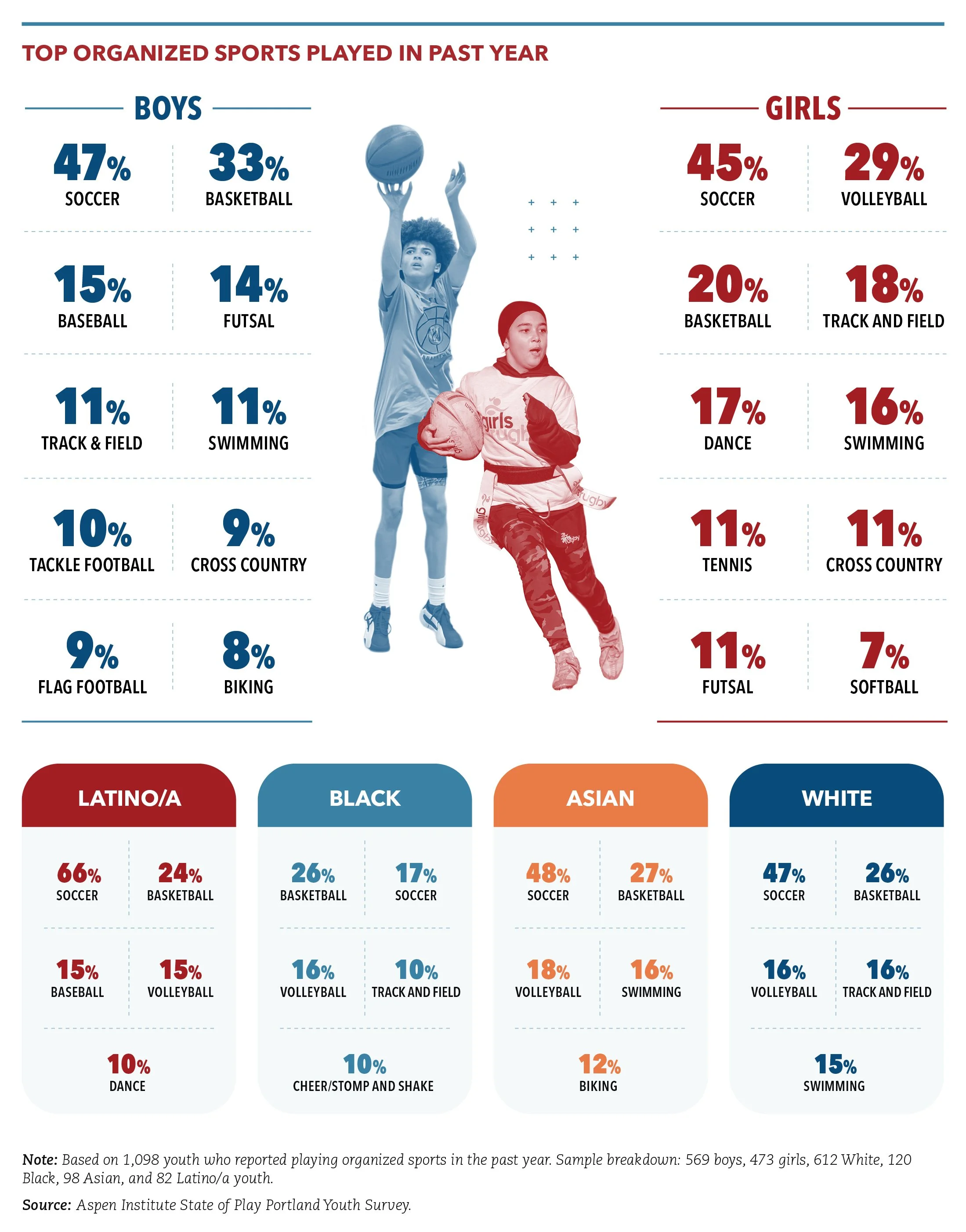
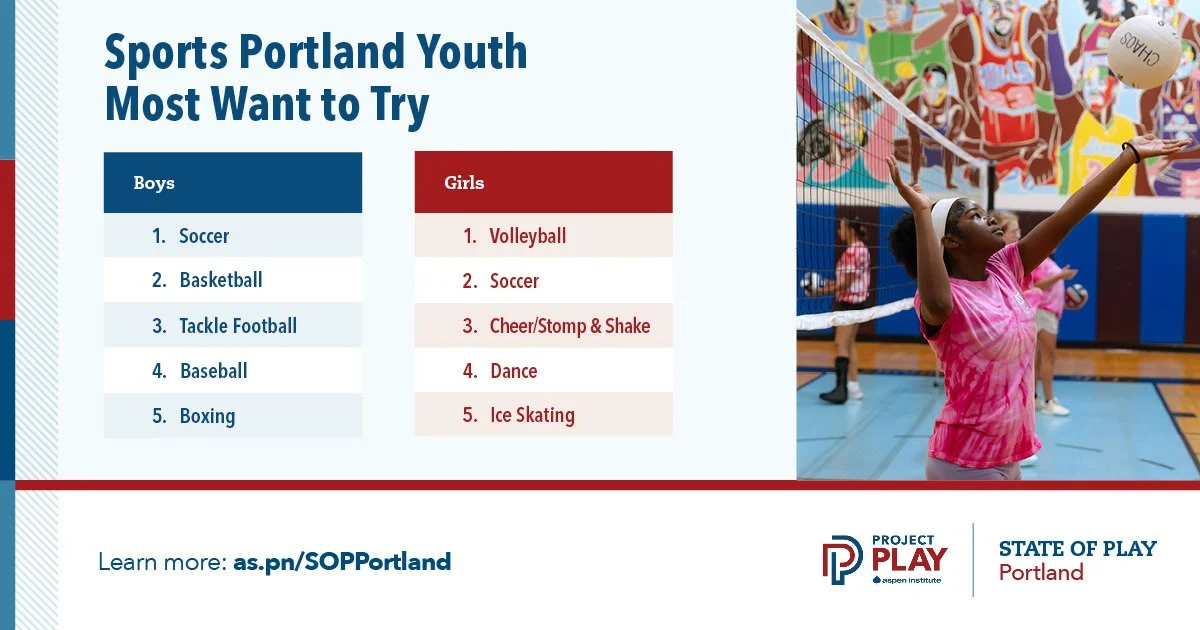
Soccer is the organized sport played the most by surveyed boys (47%) and girls (45%). However, youth participate in a variety of activities. Boys most want to try soccer, basketball, tackle football, baseball and boxing, while girls' top desired activities are volleyball, soccer, cheer/stomp and shake, dance and ice skating.
WHICH KIDS PLAY

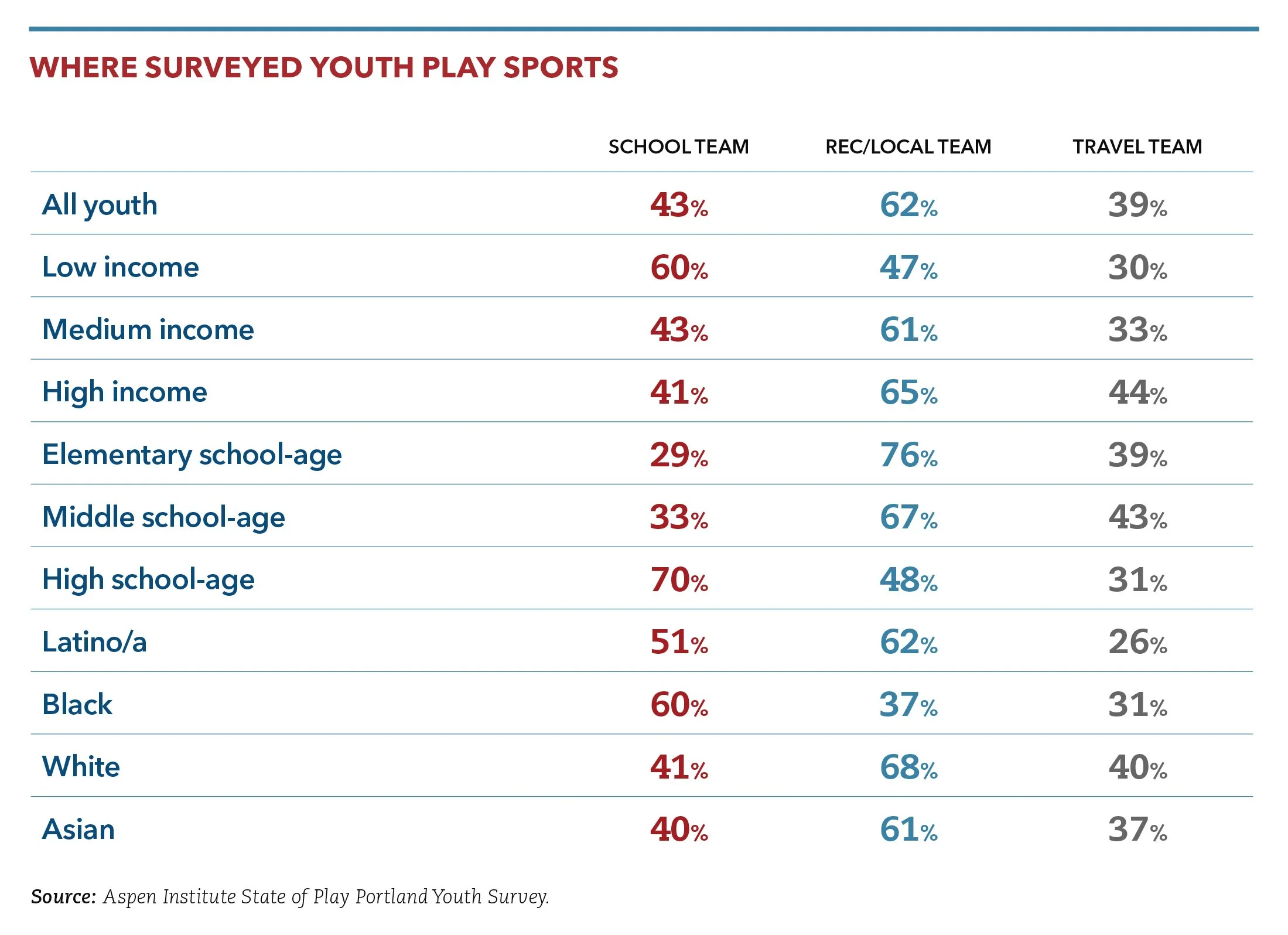
Portland girls outpace national average in sports participation, but room for growth remains. According to an Aspen Institute review of data from high school athletic associations and the Centers for Disease Control and Prevention, girls in Portland participate in organized sports at higher rates than the national average. Still, boys’ participation rates generally remain higher than girls’ rates, especially girls of color. Results from Aspen's youth survey, which skewed toward higher-income households, show that girls of color participate in organized sports 13 percentage points less than white girls.
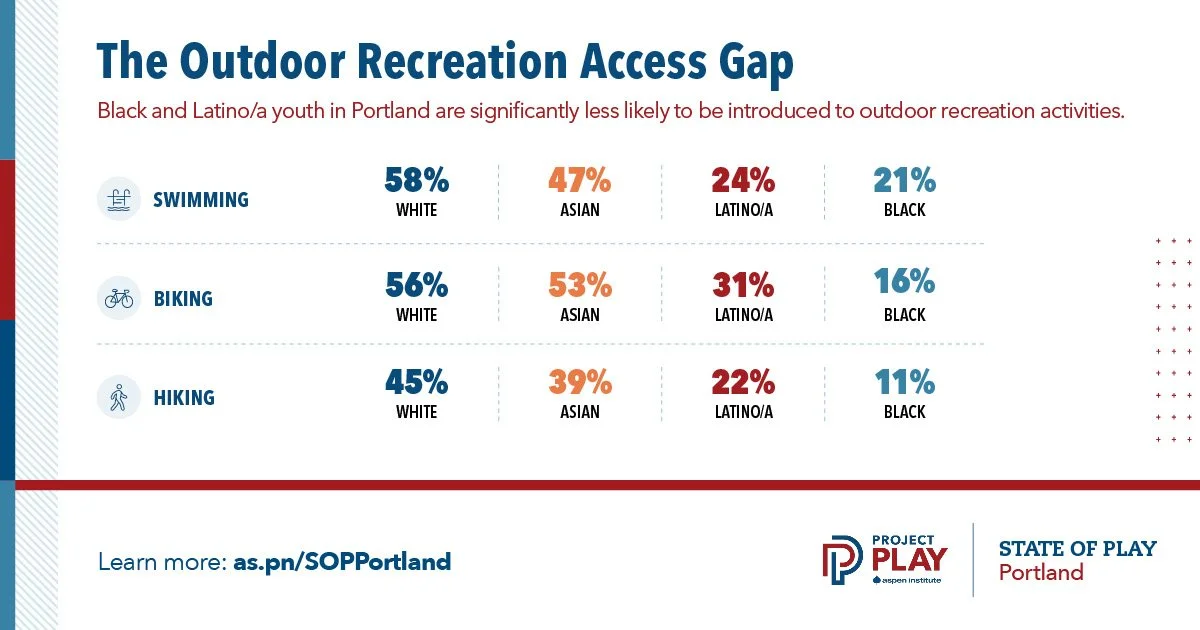
Structural challenges shape the participation rates for many Black and Latino/a youth. Costs, safety and culturally affirming programming shape the organized sports participation and outdoor recreational rates in the communities where many Black and Latino/a children live. The disparity is often not a matter of interest by children, but of access to nearby facilities and programs that meet the needs of these youth and the budgets of families.
Lack of coordination within the youth sports ecosystem impacts access for children. Portland possesses no shortage of capable actors through many well-intentioned sports organizations, coaches, educational institutions, municipal governments, companies and corporate foundations. However, many sports providers and relevant sectors work in silos within the Portland community, which has limited resources devoted to youth sports.
RECCOMENDATIONS
connect silos
Building on the work many community organizations are already leading across the city, State of Play Portland identifies the need for a more unified approach by local leaders to address systemic barriers while recognizing there is no one-size-fits-all way to collaborate and expand sports and physical activity access for children. Collaboration requires flexibility, finding common goals and language, listening to the community, and starting small and celebrating successes as they come.
Local leaders could explore the creation of a youth sports coalition and shared criteria for grantmaking. A coalition could connect municipal, school and philanthropic funders, and align resources directly behind youth programs.
OTHER RECOMMENDATIONS
Reform field permitting to prioritize under-resourced youth
Protect school-day physical activity
Invest in continuous coach training
Expand non-traditional sports options that directly align with youth interests
contact information
For more information about the State of Play Portland report, email Jon Solomon at jon.solomon@aspeninstitute.org or Ruby Avila at ruby.avila@aspeninstitute.org.
Community leaders in Portland are creating a coalition to increase access to sports and play for youth. Get involved by signing up here for the Portland Youth Sports & Play Coalition Newsletter.
The Aspen Institute thanks our partner Nike for its support of this report. The findings, conclusions and recommendations expressed in this report are strictly those of the Aspen Institute.
IN PARTNERSHIP WITH