

Coaching Trends
The trends below come from the Aspen Institute’s State of Play 2025 report, informed by interviews with leaders in the youth sports space, data analyzed by the Project Play team, or articles and research produced by other entities.
1
One million coaches got trained in youth development
- California Governor's Advisory Council on Physical Fitness and Mental Well-Being
- Center for Healing and Justice through Sport
- CoachUp! Washington
- Girls on the Run International
- How to Coach Kids
- Laureus Sport for Good USA
- LiFEsports at The Ohio State University and Ohio High School Athletic Association
- Little League International
- MCC State Learning Cohort of Maryland, Indiana, and Kansas
- National Recreation and Park Association
- Positive Coaching Alliance
- U.S. Soccer Foundation
- U.S. Olympic & Paralympic Committee
- USA Weightlifting
The Million Coaches Challenge (MCC) reached a milestone in 2025 – their cohort of partners trained one million youth coaches across the U.S. in evidence-based youth development practices. Launched in 2021 by the Susan Crown Exchange, MCC brought together 18 partner organizations to address the fact that fewer than one-third of youth sport coaches had ever received training in such practices.
Research shows that 93% of coaches trained by MCC partners feel more confident in their ability to support youth, and their athletes report more joy, stronger relationships and higher likelihood to continue playing.
In response to lessons learned through research by the American Institutes for Research, MCC, with the facilitation support of the Aspen Institute, released two new resources for coaches and leaders designed to sustain momentum and expand the movement to train coaches.
The Million Coaches Challenge Practice Guide: 12 Coaching Strategies to Support Positive Youth Development – A practical, research-backed playbook offering simple, actionable strategies that coaches can implement right away to create safe, inclusive, and empowering environments for young athletes.
The Million Coaches Challenge Calls to Action: A Vision for Youth Sports Coaching in the United States – A bold agenda organized around policy, organizational practice, narrative, and research based on shared vision for making youth-centered coaching the standard nationwide, backed by systemic investment and accountability.
“These new resources are the bridge from milestone to movement,” said Vincent Minjares, Ph.D., program manager of the Sports & Society Program. “The Practice Guide ensures coaches at every level can have access to proven strategies they can bring into their work. The Calls to Action align leaders, funders, practitioners, and policymakers to change the system around them. When we invest in coaches, we invest in kids, communities, and the future of sport.”
2
Tennis upends the NGB coach development model
Coach training should be more than a one-time occurrence. Yet coaches who were trained at least once in the previous 12 months dropped over a five-year period. For instance, 26% of coaches in 2024 had recent training in general safety and injury prevention, down from 34% in 2019.

National Governing Bodies of Sport vary in how active they are at the grassroots level, particularly in coaching. While many NGBs talk about the importance of coaches, the reality is that supporting them is time- and resource-intensive. The U.S. Tennis Association made a commitment to go there in a way that no NGB has to date and in 2025 introduced USTA Coaching, a new entity built to support coaches because “coaches need coaches too.”
Coaches who participate on the USTA Coaching platform receive access to resources and benefits such as liability insurance, telehealth, equipment discounts, coaching tools and a peer community. The platform is for anyone who delivers tennis – parents, volunteers, high school coaches, staff pros, directors of tennis, and certified professionals.
“Research shows that people aren’t attracted to coaching as a career anymore, and we need to change that, we have to rebuild this as a career,” USTA Coaching CEO Craig Morris said in an interview. “We need to work with facility owners and operators to put value on coaches who are educated and have a growth mindset. We have to rebuild this industry, and it is paramount – now – that the USTA make this decision to get engaged. We must be concerned about what this industry is going to look like in 20 years.”
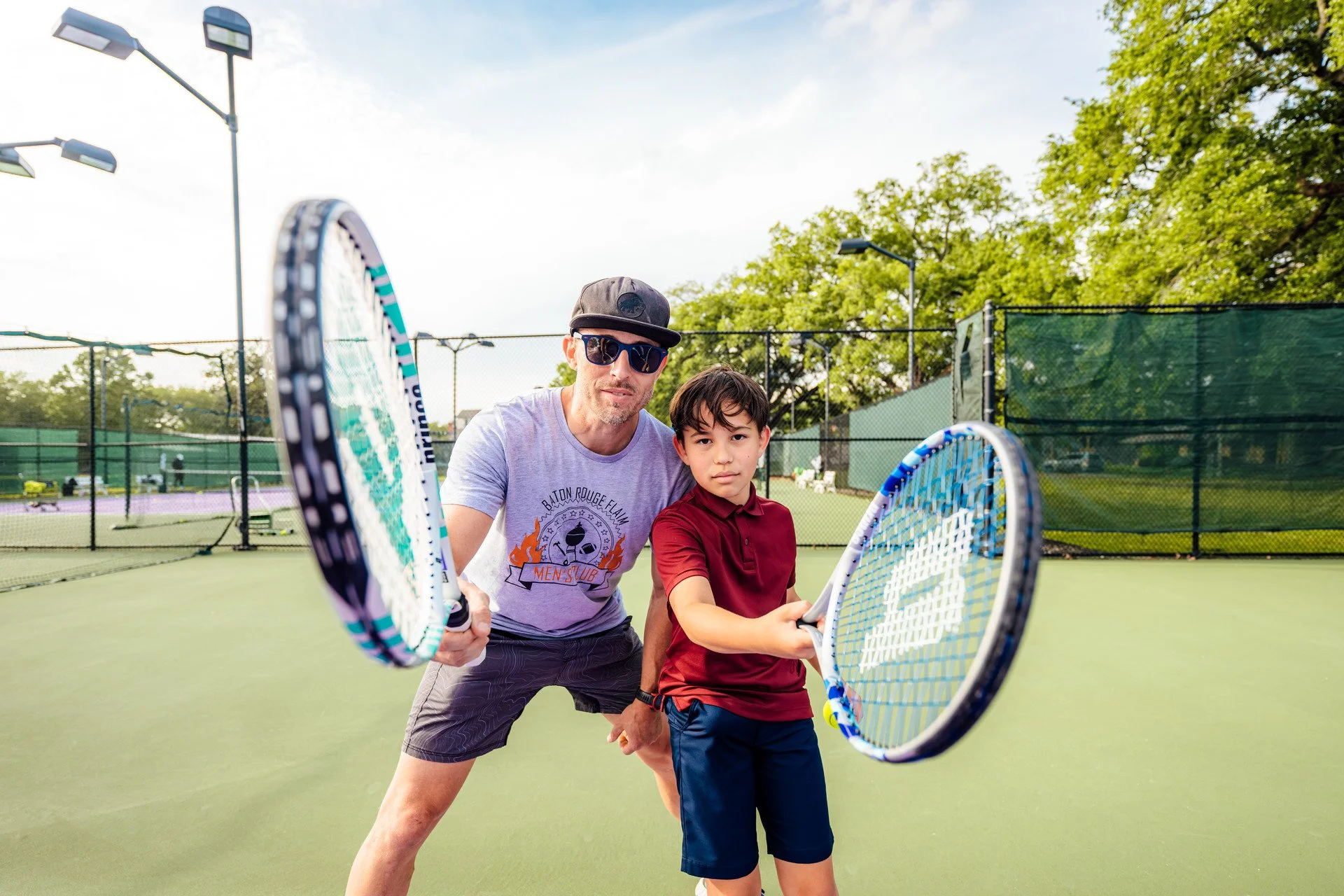
The USTA aims to help coaches make a living and better serve the interests of kids. (Photo: BREC)
USTA Coaching’s comprehensive model immediate began to draw attention from leading bodies in other sports looking to improve coaching systems. How it works:
Coaches choose one of four membership tiers: There’s Baseline (free), Rally ($49/year), Pro ($149/year) and Pro Plus ($249/year). Each tier is aimed at a specific category. For instance, Baseline is geared to parents, teachers and volunteers, and Pro Plus is for full-time teaching pros looking for insurance coverage and other benefits.
Benefits are available in every tier: Equipment discounts start at a minimum 20% for Baseline and go up to 50%. All participants must be Safe Play approved with athlete safety education, background screening and clear policies to receive discounts and benefits from USTA Coaching.
“Office hours” for coaches: USTA will have coach developers around the country available to answer questions, give advice, offer career counseling, and more. Pro-level participants will have heavily discounted registration to USTA Coaching conferences.
Flexible education model: Coaches can find digestible content on topics suited to their needs. They earn badges by completing six online modules, each no more than 20 minutes. For example, there’s education on introducing kids to tennis, the business of coaching, adaptive tennis, youth development, understanding ratings and rankings, understanding USTA tournaments, running summer camps, finding the right racquet for players, working in parks & rec departments, empowering girls, and much more.
Certification process: The badges can lead to professional certification, if that’s the desire. There are three levels – Coaching Professional, Coaching Specialist and Coaching Master. In-person training will be part of the certification program.
The USTA Coaching model aligns on many levels with the findings of an Aspen Institute survey of sports parents, which teased out insights on their desired approach to coaching.


3
Wildly different ideas emerge about who should get in the game
Through at least age 12, Project Play recommends that coaches provide equal playing time for all children. The argument is simple: what kids want out of a sports experience is both action and access to the action. Getting stuck at the end of the bench does not foster development. Kids who quit sports often do so because of lack of playing time. Too many coaches assign playing time based on skill level and the score of the game.
Yet many sports parents appear to be OK with some form of early sorting. Among those with kids ages 6-10, only 23% say equal playing time is the right policy for their child’s age and competitive level, according to a survey by the Aspen Institute, Utah State University and Louisiana Tech University. That’s nearly the same rate as parents of children ages 11-14 (19%) and 15-18 (17%), when equal playing time becomes less of a consideration.

About half of all surveyed sports parents believe every child on a team should receive some playing time. Yet one in 10 parents of children ages 6-10 and 11-14 say only the best players should play, an approach that can cause more problems than it solves.
Research shows “when benching is used primarily to manage performance errors and enforce win-at-all-costs mentalities, toxic team cultures may occur.” However, when benching is attached to caring and supportive team climates, it “helps instill positive team culture and expectations, such as accountability, respect, fairness and competition.”
Playing time shouldn’t be earned at younger ages, before children grow into their bodies, minds and true interests. Experts say a better approach is to invest in the development of all kids, not just early bloomers and early starters, and hold off on sorting stars from supporting players until after puberty.
4
Parents expect coaches to pass background checks
Nearly 9 in 10 youth sports parents (88%) say their child’s coach should pass a criminal background check, according to an Aspen Institute survey with Utah State University and Louisiana Tech University. Parents in the lowest-income homes were almost two times more likely than the wealthiest to say no background check is needed. Tackle football parents were almost four times more likely than flag football parents to believe no background checks are needed.

In 2025, NJ.com identified that at least 118 youth sports coaches, trainers and other personnel have been accused of sex crimes across New Jersey since 2015. The investigation also revealed that existing public sex offender registries are unreliable for vetting youth coaches. The reporting found that many convicted sex offenders do not appear on the public registry.
After the reports, New Jersey lawmakers proposed uniform state laws to keep youth safe from predatory coaches. Assemblyman Jay Webber introduced a bill that would require anyone who works with youth athletes to undergo annual background checks.
“This isn’t the Saturday morning Little League of our childhood,” Webber said in a statement. “This is a multi-billion dollar industry, with the push to discover the next Shohei Ohtani or Caitlin Clark. The increasing demand for coaches and trainers and the popularity of travel teams has created more opportunities for our athletes while at the same time increasing their chances of being exposed to harm. Sadly, men and women who want to harm children find ways to work with children. And the lack of regulation and oversight within many youth sports makes it an attractive opportunity for predators.”
The reality of background checks in youth sports is that minus uniform laws or enforced policies, they vary wildly by team or organization – assuming they’re even applied. And it can be costly. For example, the Oregon Youth Soccer Association spends $165 per coach on federal background checks, which resulted in 54 out of 9,333 prospective coaches failing in 2024-25.
Reasons for disqualification included criminal records showing assaults, DUIs, hit-and-run, criminally negligent homicide, sexual abuse, robbery, endangering minors, and delivery of meth. Simon Date, Oregon Youth Soccer Association executive director, estimates 60% of the disqualifications are for DUI. The association’s policy is that a person can’t coach for three years after a DUI. “We may change it,” Date said. “It’s kind of old-fashioned because it used to be that coaches would drive the kids everywhere. Nobody does that anymore.”
When deciding who to disqualify, the Oregon Youth Soccer Association uses a matrix based on the felony or misdemeanor level as adjudicated by the courts.
“Usually the real bad cases were many years ago, and now they’ve done 20 years in prison and there’s a tiny part of me thinking, ‘Well, maybe there is a second chance,’” Date said. “But you also don’t want to take that risk when there’s plenty of other coaches who could coach. It’s not good. It gets depressing at times seeing all these red flags.”

5
Knee injury prevention becomes mandatory in coach training
The U.S. Soccer Federation is making ACL injury prevention a mandatory piece of education for coaches completing their C license and above. That’s more than 100,000 coaches, so the policy marks a significant commitment to address the crisis of serious knee injuries in soccer. "This is a major step forward for our sport," said George Chiampas, U.S. Soccer chief medical officer. "That means all coaches in the U.S. that coach 11v11 will be mandated to review and complete education on this life-changing injury.”
American Youth Soccer Organization (AYSO) is also taking action on the ACL injury crisis with a first-of-its kind, national age-based training program for youth soccer players. Designed in partnership with researchers from Cedars-Sinai, the program teaches coaches simple exercises that can be added to warm up. The program starts with players as young as 8 and progresses over time as youth grow in skill and maturity.
In 2025, researchers explored the potential return on investment of ACL injury prevention using an estimate of $15,046 per surgery. When they simulated a nationwide implementation of ACL Injury Prevention (translation: simple exercises done regularly), they projected a return of $7.51 saved in surgery costs for every $1 spent on prevention.
Knee injuries account for about half (53%) of all sports injuries tracked, according to insurance claim data from Players Health. Their study of 93,000 knee injury claims found over $35 million in payouts, resulting in a cascade effect of higher premiums and program cuts.
Coaches can help by teaching their athletes neuromuscular training. In 2025, the National ACL Injury Coalition led by Hospital for Special Surgery and the Aspen Institute released “Field Guide to Reducing Serious Knee Injuries,” a resource for local sport leaders committed to athlete health and safety. The field guide is optimized for organizations serving youth 13 and older, the age at which knee injuries begin to grow dramatically. However, neuromuscular training is important and effective for pre-adolescents and these principles and practices can be applied to younger ages as well.
Also in 2025, the National ACL Injury Coalition launched the ACL Pledge, a campaign to raise awareness and inspire action on the ACL Injury crisis in youth sports. Coaches and anyone can join Stack Sports, Sports Connect, Florida Youth Soccer, and the National Strength & Conditioning Association and others in lending their voice to this initiative.

Knee injuries are among the most serious, costly and long-lasting in sports. (Photo: Getty Images)