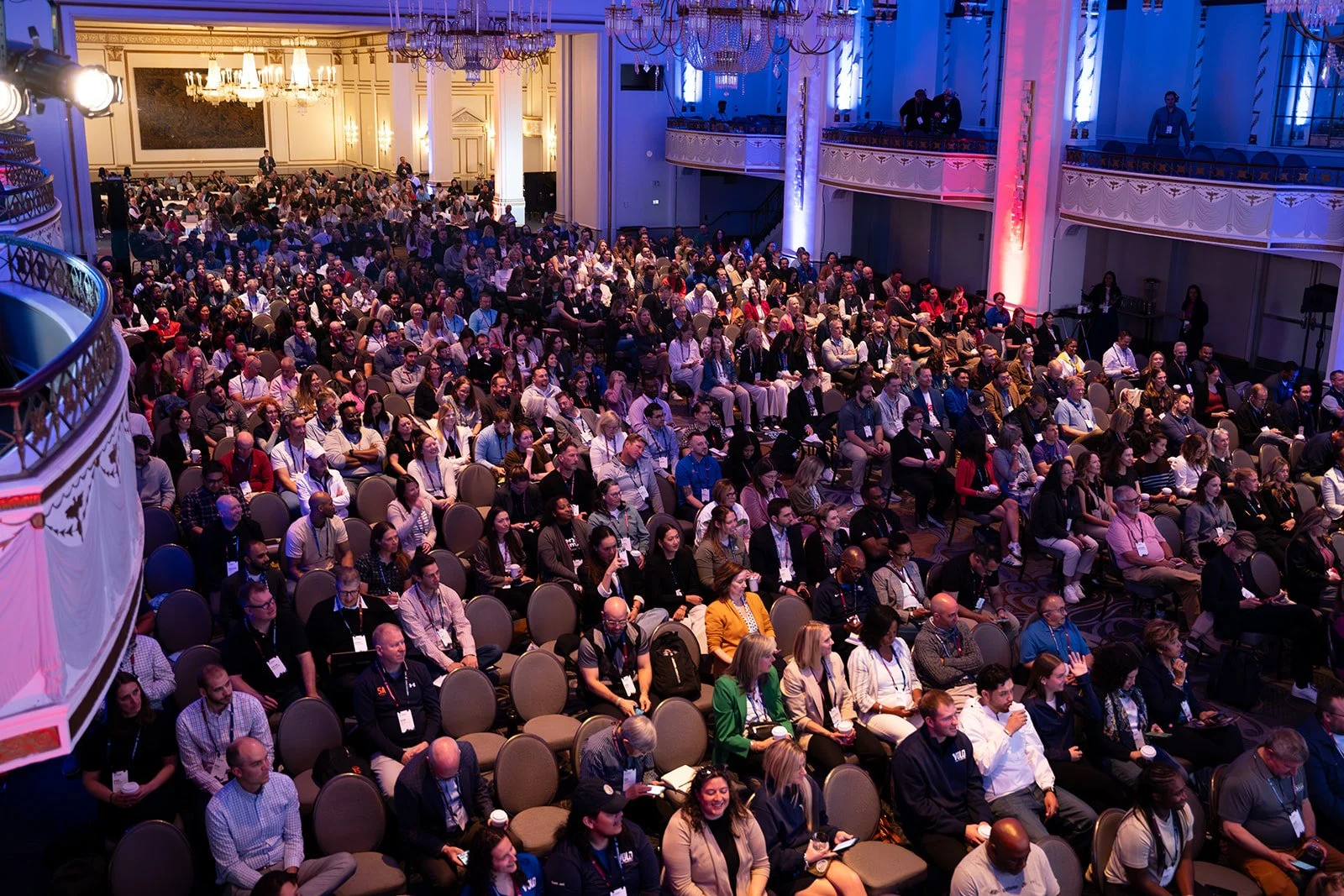
Photo: Mironko Productions for the Aspen Institute
Looking out from the main stage at the Project Play Summit in Boston earlier this month at the nearly 900 leaders in attendance — so many you couldn’t see faces at the back of the room — I finally gained the confidence to think out loud what I’ve been resisting for more than a decade:
That Project Play is now a movement.
No longer just an idea or initiative. A social movement.
Let me explain my hesitancy to date.
First, the term “movement” is overused, too often deployed by people who have something to sell and want others to line up behind them without going through the process of creating and advancing a shared vision. That takes time.
Second, I’m a trained journalist. I prefer listening to preaching, and to building tables with competing points of view. I want private equity types sitting next to park and rec leaders, so ideas can be tested and shared solutions can emerge.
Third, Project Play was not conceived as a movement. Back in 2013 when our Sports & Society Program convened 80 leaders in Aspen, it was just as a thought leadership exercise — a two-year effort to create a plan to reimagine youth sports in America. We aimed to develop ideas that other organizations with real power, from the U.S. Olympic & Paralympic Committee from policymakers, could operationalize.
We did that, convening more than 300 leaders at eight roundtables before releasing, in 2015, our seminal report, “Sport for All, Play for Life: A Playbook to Get Every Kid in the Game” — eight strategies for the eight sectors that touch the lives of children.
The report sparked a conversation, but what we heard in that conversation was that the U.S. lacked the sport governance structure to embed these strategies into the delivery of sport programs. So our then-tiny program took a deep breath and committed to doing what we could to turn ideas into action.
We, quietly, built a movement to drive change, piece by piece. We created and encouraged:
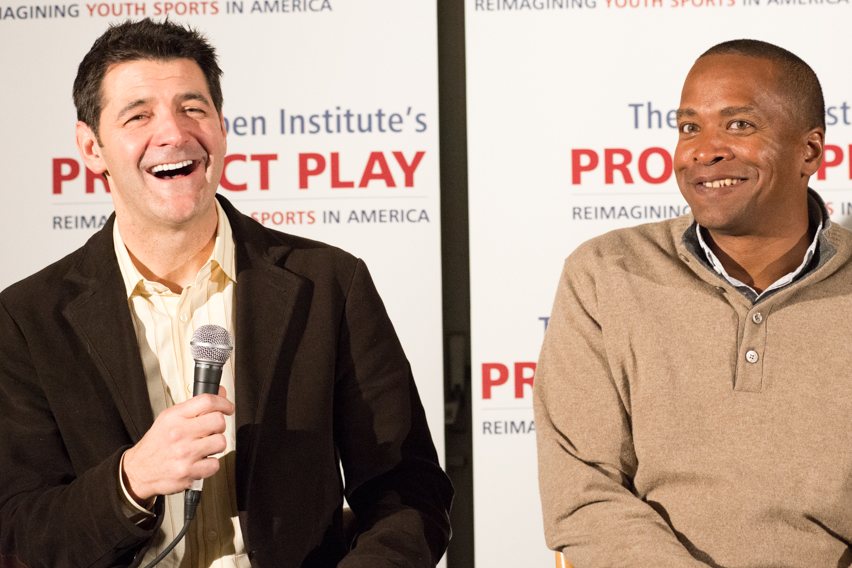
Tom interviews Google executive David Drummond at the Project Play launch event in 2013.
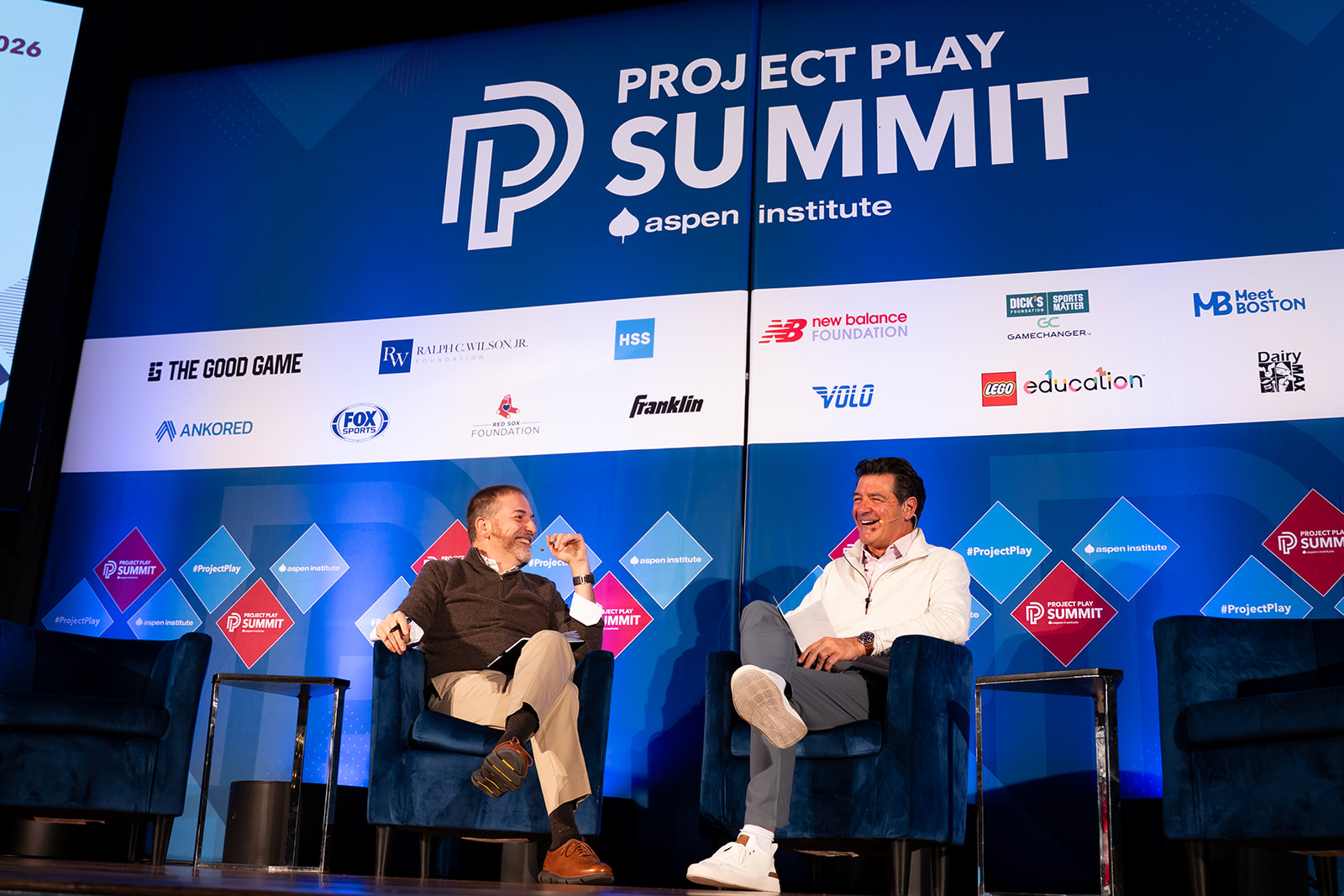
Tom interviews journalist Chuck Todd at Project Play Summit 2026 in Boston.
A Moral Narrative: Sport as a Public Good
Commercialization of youth sports was on the march, led by private clubs filling the void created by schools and municipalities reducing support for programs. Early sport specialization and “elite” status competition were being sold as child and athletic development.
“Sport for All, Play for Life,” which is classic movement language, served to remind everyone that youth sport is not a subset of the entertainment industry. It’s community infrastructure and a development opportunity to which all kids should enjoy access.
Shared Frameworks
Journalists are trained never to write the same thing twice. Movement-building requires just the opposite: Once you’ve arrived at shared frameworks and language, say them over and over and over so people can start nodding their heads and be moved to action.
We structured our Summits and State of Play reports around the strategies in the seminal report. Since then, we have developed companion frameworks, most notably the Children’s Bill of Rights in Sports a minimum building code for programs serving youth, aligned with recognized human rights principles. More than 500 organizations, mayors, athletes and sports entities have endorsed the framework, most recently adidas Foundation, the World Cup Host Committee for Boston, and the latest cohort of Project Play Champions.
Distributed Leadership
Our 11-member Sports & Society team may be the backbone of Project Play, but movements are not controlled by any one institution. Leadership becomes networked and decentralized, with local champions adapting the vision to their communities.
From Project Play Southeast Michigan to any of the other communities where our research team has landscaped the state of play — a number quickly approaching two dozen — that is what happened. Some local coalitions mobilize around strategies, incentivized by grantmaking; others grab insights and mobilize around related opportunities.
Cross-Sector Coalitions
Who is the audience for Project Play? Anyone or entity that touches the life of a child. We believe no one organization or even sector can build healthy children and communities through sports. We need everyone singing off the same sheet — community recreation groups, national sport organizations, tech and media leaders, schools, researchers, foundations, athletes, coaches, business leaders, mayors, and of course parents.
That coalition-building shows up most visibly in our 63X30 roundtable, a mosaic of leading organizations committed to leading the call to action to get 63% of youth playing sports by 2030. At this year’s Summit, we added the Boys & Girls Clubs of America, FOX Sports and the U.S. Soccer Federation’s new foundation, Soccer Forward.
A Cultural Reframe
Through Project Play, we have tried to normalize ideas that were once peripheral to sport delivery models. Those include multi-sport play, athlete voice, access and equity, coaching quality, ecosystem design, and sport as a means to improve mental health.
Many of these concepts are now mainstream in the youth sports discourse, even as economic and governance models struggle to embed as much as fully as many of us want. You could see these concepts in the digital conversations surrounding the Summit, which generated nearly 50,000 impressions and 4,000 interactions across our social channels.
Public Participation
To date, we have worked more top-down than bottom-up, with the array of organizations responsible for the policies, practices and partnerships that shape landscape of youth sports.
But all our resources are free and available on the Project Play website, which more than 300,000 people now consult annually, including many leaders with vast networks of their own. Some resources are designed first for consumers, like the Parent Checklists (latest addition: for Latino families!).
Long-Term Persistence
Good things happen when people see you aren’t going away. That’s not an easy thing to do in a space, youth and community sports, that foundations and policymakers have yet to fully embrace. We need both of them to fund and help drive systems change.
That’s on us to create the value proposition, to help them understand how sports can address a range of social challenges they care about. Collective impact venues like 63X30 can help, providing population-level indicators of progress at scale. This year’s Summit was promising: We hosted Congressional staff that organized the first-ever hearing on youth sports and several foundations new to the sector.
And finally…

Project Play Summit attendees get moving at the VOLO Day of Play on Boston Common, May 4, 2026. Photo: VOLO Kids Foundation.
Tangible Wins
We’re proud of what Project Play has helped create or shape over the past decade: Aligned initiatives by professional sports leagues, more than $100 million in grantmaking, an award-winning media campaign, new national coalitions, and data that helps news media explore the terrain.
But the ultimate goal is to get and keep more children playing sports. And so it was with great appreciation for leaders in the space that we were able to share at the Summit the latest government data, showing that 58% of children ages 6-17 are now playing sports — higher than before the pandemic that disrupted the lives of so many young people.
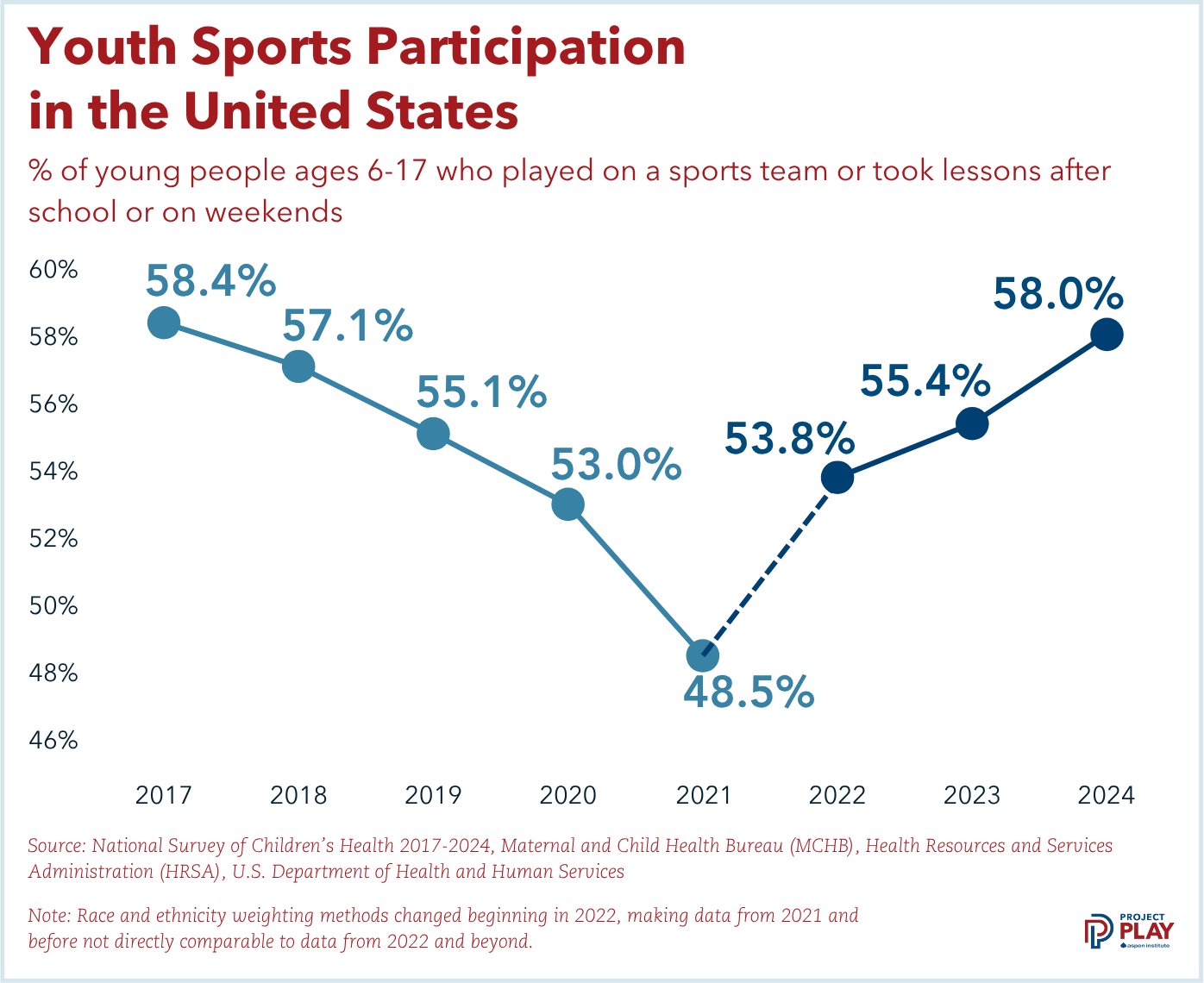
Members of the Project Play network don’t control the economy, technology trends, immigration policy, public funding for schools and municipalities, and other factors that shape sport participation. But they can influence the delivery of organized sports, and I have no doubt that all the innovation and commitments flowing into the space in the past few years have made a difference.
Thank you to my team and all who we stand shoulder-to-shoulder with us, driving progress. That was quite the moment in Boston, feeling the energy in a sold-out room then learning that twice as many people — nearly 2,000 — were watching on livestream.
This is what a true social movement looks like.
And we’re just getting started. Let’s move that dial to 63% participation by 2030 and along the way build youth-centered sport ecosystems that serve all stakeholders. Please read Project Play’s Theory of Change to explore ways for you and your organization to plug in, including but not limited to endorsing the Children’s Bill of Rights in Sports, a foundational step in signaling your commitment to build healthier sport models for kids.
Hope to see you at next year’s Project Play Summit in Milwaukee (join us!).
Tom Farrey is founder and executive director of the Aspen Institute’s Sports & Society Program and author of Game On: The All-American Race to Make Champions of our Children. He can be reached at tom.farrey@aspeninstitute.org.