
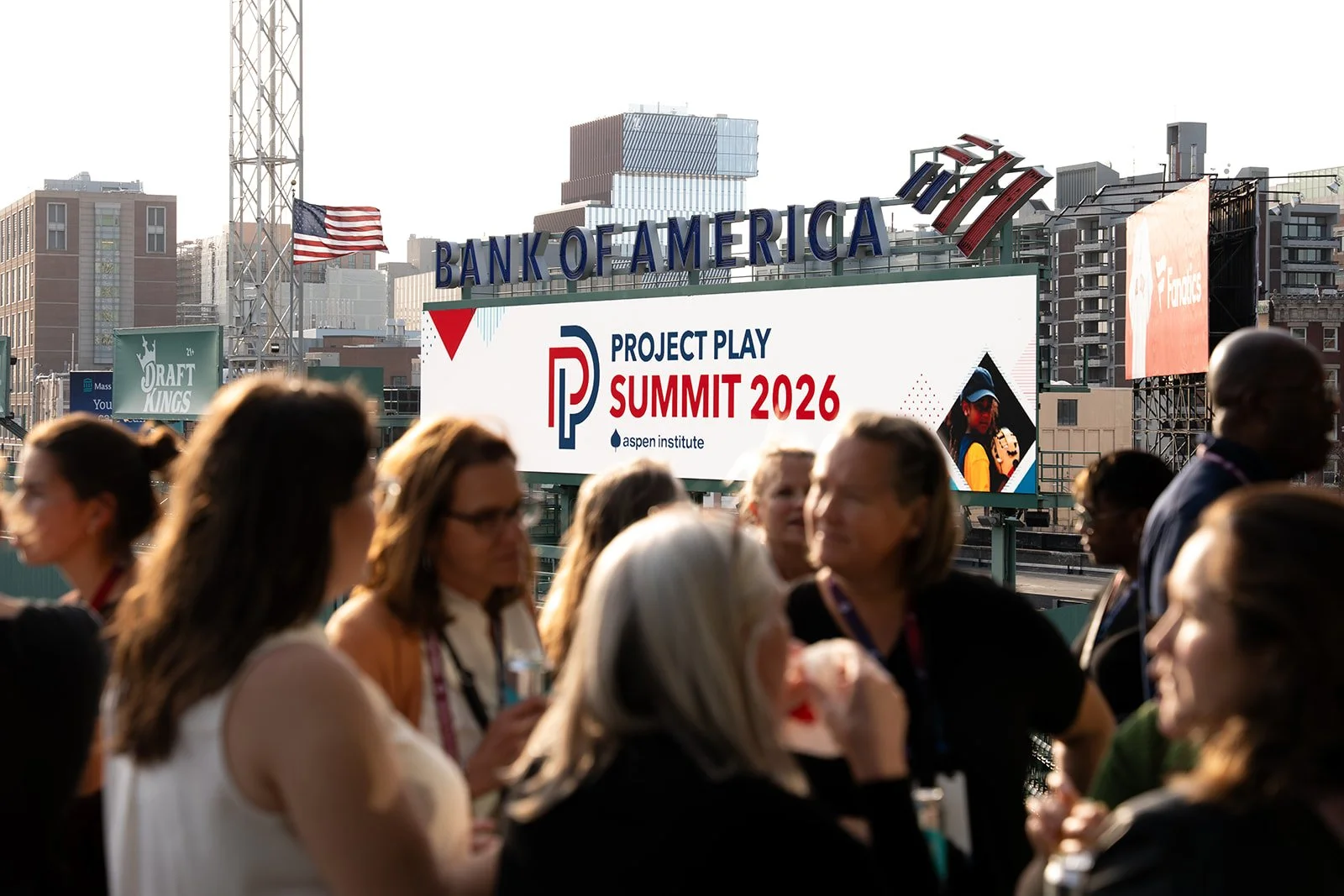
The Summit audience enjoyed a warm spring evening for the networking reception at Fenway Park. Photo: Mironko Productions for the Aspen Institute.
Boston, Mass. — A new leadership program for student athletes, a major coaching initiative, and a wave of new 63X30 partnerships signaled the next phase of work to expand and improve youth sports across the country for more than 875 leaders gathered in Boston for the largest Project Play Summit to date — with hundreds more joining by livestream from across the country and globe.
Across two days at the Hilton Boston Park Plaza, participants focused on how to strengthen coaching, reduce injury risk, build local sport ecosystems, and close participation gaps. They also explored policy opportunities and the growing role of technology and private investment.
National organizations came together to launch new partnerships aimed at reaching more kids and improving the quality of youth sports, including Boys & Girls Clubs of America and U.S. Soccer, alongside partners like Inspire Brands Foundation and Bank of America. The DICK'S Sporting Goods Foundation and GameChanger introduced a coaching initiative focused on the local level, where most kids first encounter sport.
These efforts build on a positive trend. Youth sports participation in the United States has reached 58%, continuing a steady rebound from pandemic-era lows and moving closer to the goal of 63% by 2030.
The gains are real. But so is the work ahead. Costs are rising. The market is shifting. And access still depends too much on where you live and what you can afford. The next phase is clear: not just growing participation, but making sure more kids can stay in the game.

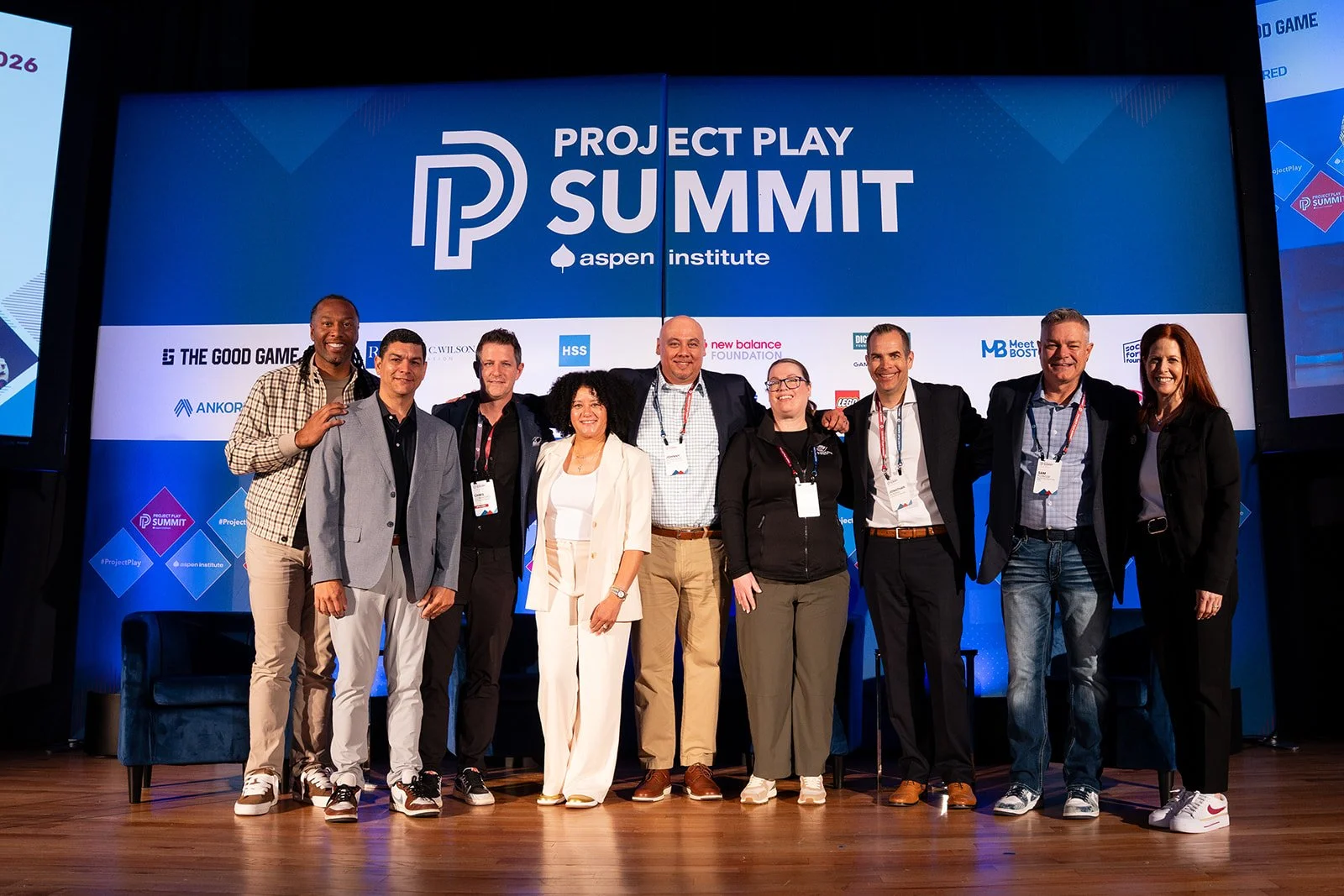
The session “From Team Captains to Community Champions” featured high school captains who have become leaders in their communities. L-R: Carol Yan, Guywintz Jules, Ma’Net Richardson, and Jeff Price.
Photo: Mironko Productions for the Aspen Institute
From team captains to community champions
If participation is the core KPI — Key Play Indicator — for the 63X30 initiative, the next is what young people take from the experience: the skills, confidence, and sense of belonging that keep them coming back.
That idea showed up from the start. The Summit opened with a second line of Berklee College of Music students moving through the ballroom, pulling the crowd to its feet, as Brandon "Stix" Salaam-Bailey set the tone as emcee.
From there, the conversation shifted to how sport builds connection, identity, and leadership. Leaders pointed to the need to rethink success in youth and school sports, not just in terms of outcomes on the field, but outcomes in life.
Journalist Chuck Todd framed youth sports as something larger than a pastime: "one of the few places where red America and blue America still show up together," he said, pointing to the role sports can still play as one of the last shared spaces.
The launch of the Captains Leadership Academy reinforced that shift. The new effort, backed by the Heisman Foundation and the Aspen Institute with the support of IMG Academy, is designed to develop high school team captains into civic leaders equipped to lead in their schools and communities.
Announcing the initiative — the largest single grant in Heisman history — Heisman chair Dan Reed posed a simple question: "What if they were captains for more than just their team?"
Heisman winner and Pro Football Hall of Famer Tim Brown, one of the Academy's founding mentors, put it simply: "There's a difference between confidence and belief. And once you have belief, everything changes." The student-athletes on stage already knew it. "Anyone can be a leader," said Guywintz Jules, a high school soccer and track captain from Salem, Mass. "What defines someone is the desire to make a change."
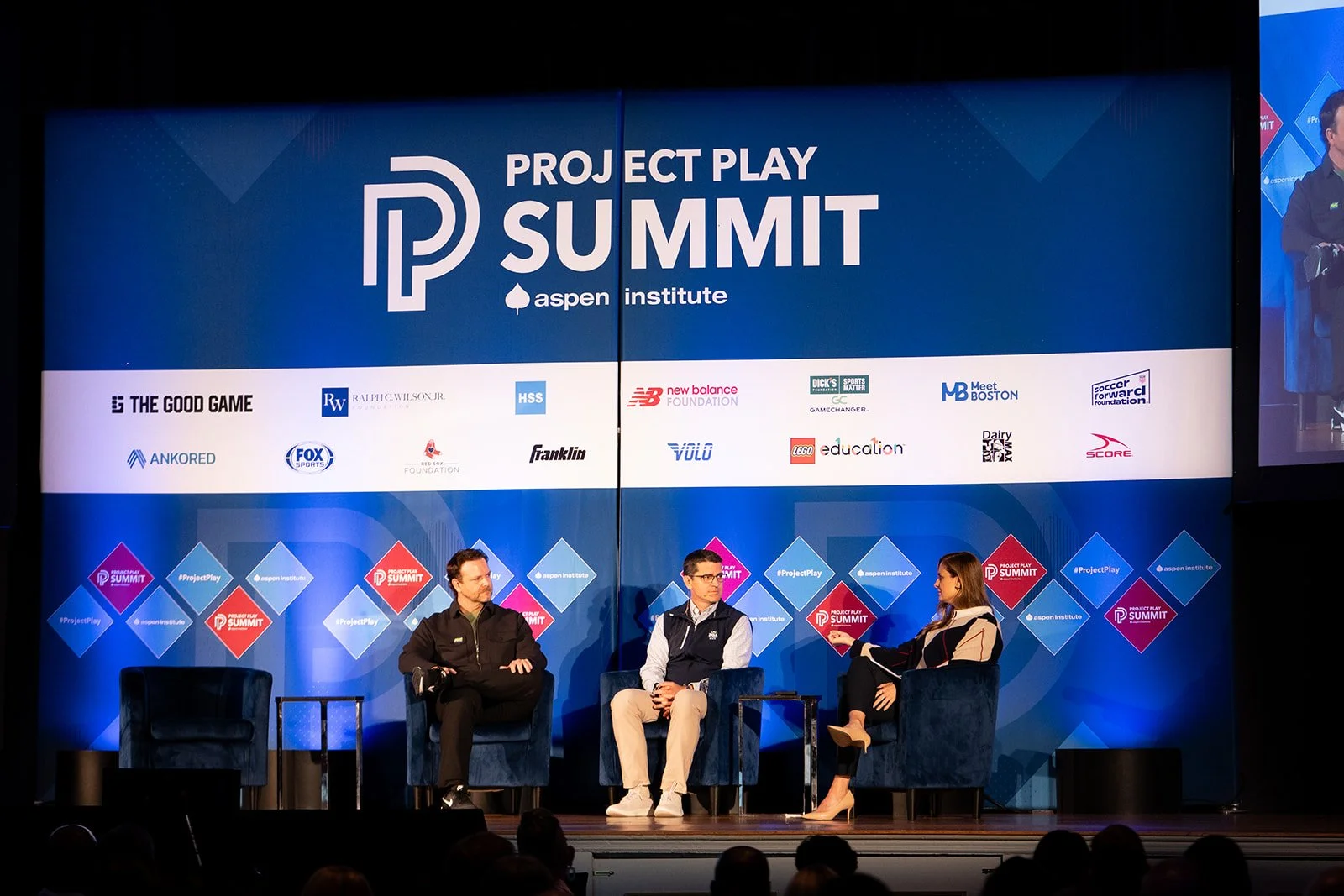
“63X30: Progress!” showcased new initiatives from roundtable partners. L-R: Rick Jordan, Steve Tanner, Ashleigh Huffman. Photo: Mironko Productions for the Aspen Institute
63X30 gains ground: New partners, new momentum
The Project Play network has rallied around a clear goal: 63% of youth playing sports by 2030. Participation is moving in the right direction. The challenge now is turning that momentum into something that lasts.
For many families, youth sports can still feel fragmented — a mix of schools, leagues, and private providers that don't always connect. That's where the latest wave of partnerships is focused: not just expanding access, but making the experience more consistent and easier to navigate.
Project Play’s national youth survey data shows that “bad coaching” is one of the most common complaints for youth athletes. On the Summit stage, the DICK'S Sporting Goods Foundation and GameChanger announced “MVC: Most Valuable Coach.” When coaches are trained, retention improves significantly — 95% of kids who play for trained coaches return the following year, compared to 74% of kids with untrained coaches. "Young people thrive when they feel safe, supported, and connected," said Rebecca Wasserman, vice president for strategy, operations and impact at GameChanger.
The new initiative, developed in partnership with the Center for Healing and Justice through Sport, focuses not just on performance, but on the experience kids have and whether they feel supported enough to keep going.
At the same time, new 63X30 partners including Boys & Girls Clubs of America and U.S. Soccer’s Soccer Forward are working to expand access through communities and schools, the front door to youth sports. In golf, the PGA of America, First Tee, and Youth on Course formally aligned under the 63X30 banner as the 63X30 Golf Alliance, with a shared focus on facility access in 2026 — a model the network hopes other sports will follow.
At the local level, that approach is already taking shape. In Phoenix, a broad coalition of partners. including Boys & Girls Clubs of the Valley, Arizona Soccer Association, Phoenix Raceway, Thunderbirds Charities, the Arizona Diamondbacks, Phoenix Suns, Phoenix Mercury Foundation, Fiesta Sports Foundation, and former Arizona Cardinals star Larry Fitzgerald announced AZPLAYS, a new effort to expand access through community-based programming. "We have to increase our kids' access to athletics," Fitzgerald said. "It's where they build relationships and develop the skills to be leaders."
The urgency behind that work is backed by data. Stix, reflecting on his own experience growing up in Watts, pointed to a stark pattern: Black-led nonprofits operate with roughly 76% less unrestricted funding than comparable white-led organizations, even as Black youth rely more heavily on school and community sports than their peers. Black participation in baseball has dropped from 18% in the 1990s to just 6% today. "When access costs money, relationships, and infrastructure," he said, "entire communities get locked out before the game even starts."
NFL star Larry Fitzgerald and community partners announced the AZPLAYS initiative. Photo: Mironko Productions for the Aspen Institute
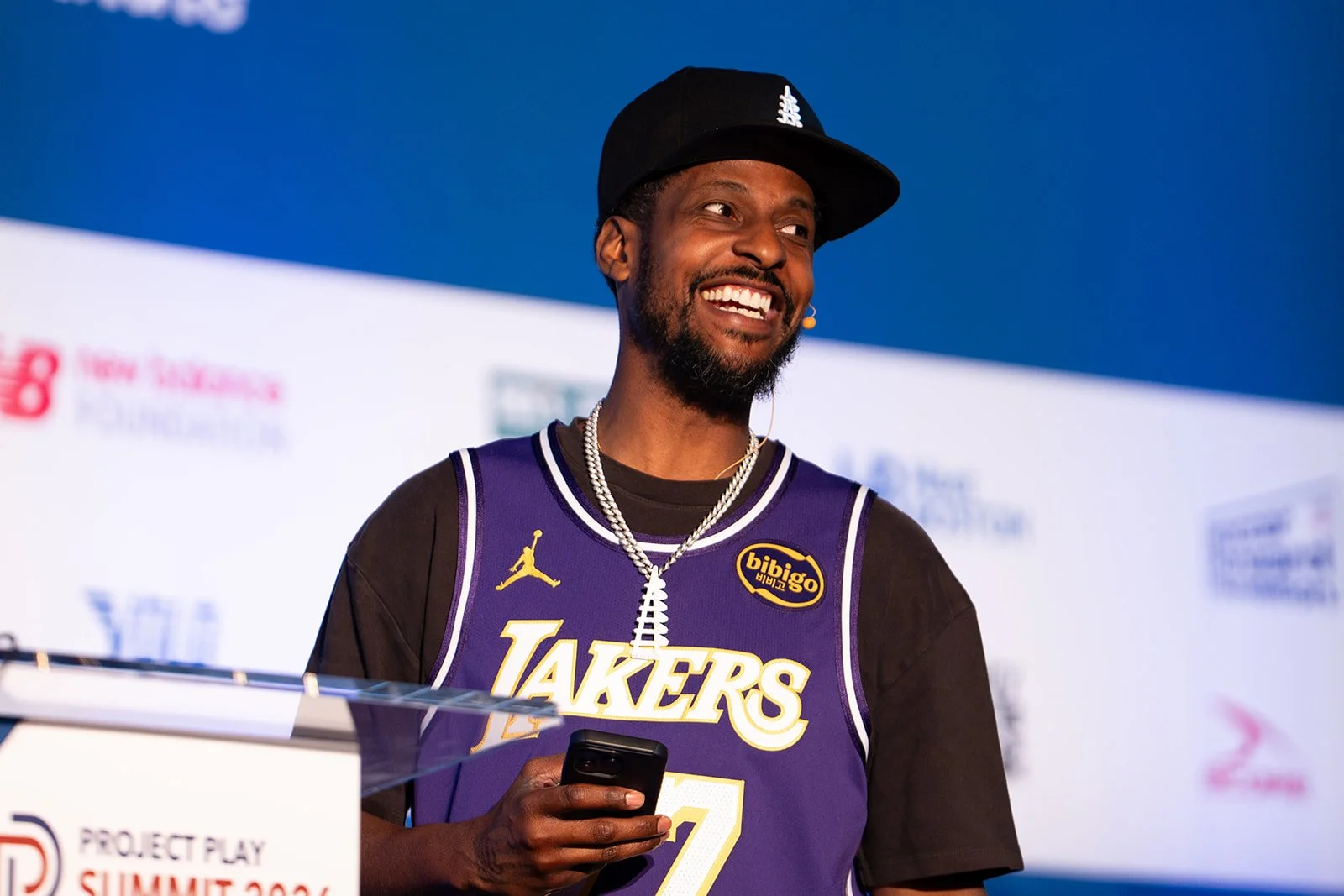
Summit emcee Brandon “Stix” Salaam-Bailey emphasized the value of local programs. Photo: Mironko Productions for the Aspen Institute
“Sports is a common language. And we don't have a lot of commonality anymore.”
Chuck Todd, The Chuck Toddcast
“95% of kids who play for trained coaches come back the next year.”
Rebecca Wasserman, VP, Strategy, Operations & Impact, GameChanger
“There's nothing like youth sports — what it means to be part of a team, to show up for each other.”
Michelle Wu, Mayor of Boston
“Local sports saved my life. Parks and rec saved my life.”
Brandon "Stix" Salaam-Bailey, Founder, ThinkWatts
New frontiers: The forces reshaping youth sports
As participation grows, the system itself is being reshaped by forces beyond the field. Across sessions, leaders looked at how technology, capital, and culture are reshaping youth sports — and who benefits from those changes.
Artificial intelligence is beginning to change how athletes are trained and evaluated. It has the potential to expand access but also introduces new risks. "Please don't mistrust your own experience and your own instincts and your own relationships with these kids," said Calli Schroeder of the Electronic Privacy Information Center. "That matters so much more than what a machine is telling you."
Private investment is also playing a growing role, reshaping how youth sports is organized and delivered. "The profit motive of these investment firms is inherently at odds with those goals," said Katherine Van Dyck of the American Economic Liberties Project, "designed to keep innovators out and to keep families and kids trapped inside."
At the same time, conversations pointed to a different model — youth-centered systems designed around the needs of kids first. Drawing on international examples including Norway's approach, speakers described what systems can look like when they prioritize the well-being and rights of children above all else. New organizations announced their endorsement of the Children’s Bill of Rights in Sports: the Boston Athletic Association, the Boston Host Committee for the FIFA World Cup 26, Boston Legacy FC, and the adidas Foundation.
Boston Legacy FC midfielder Bárbara Oliviera announces the club’s endorsement of the Children’s Bill of Rights in Sports
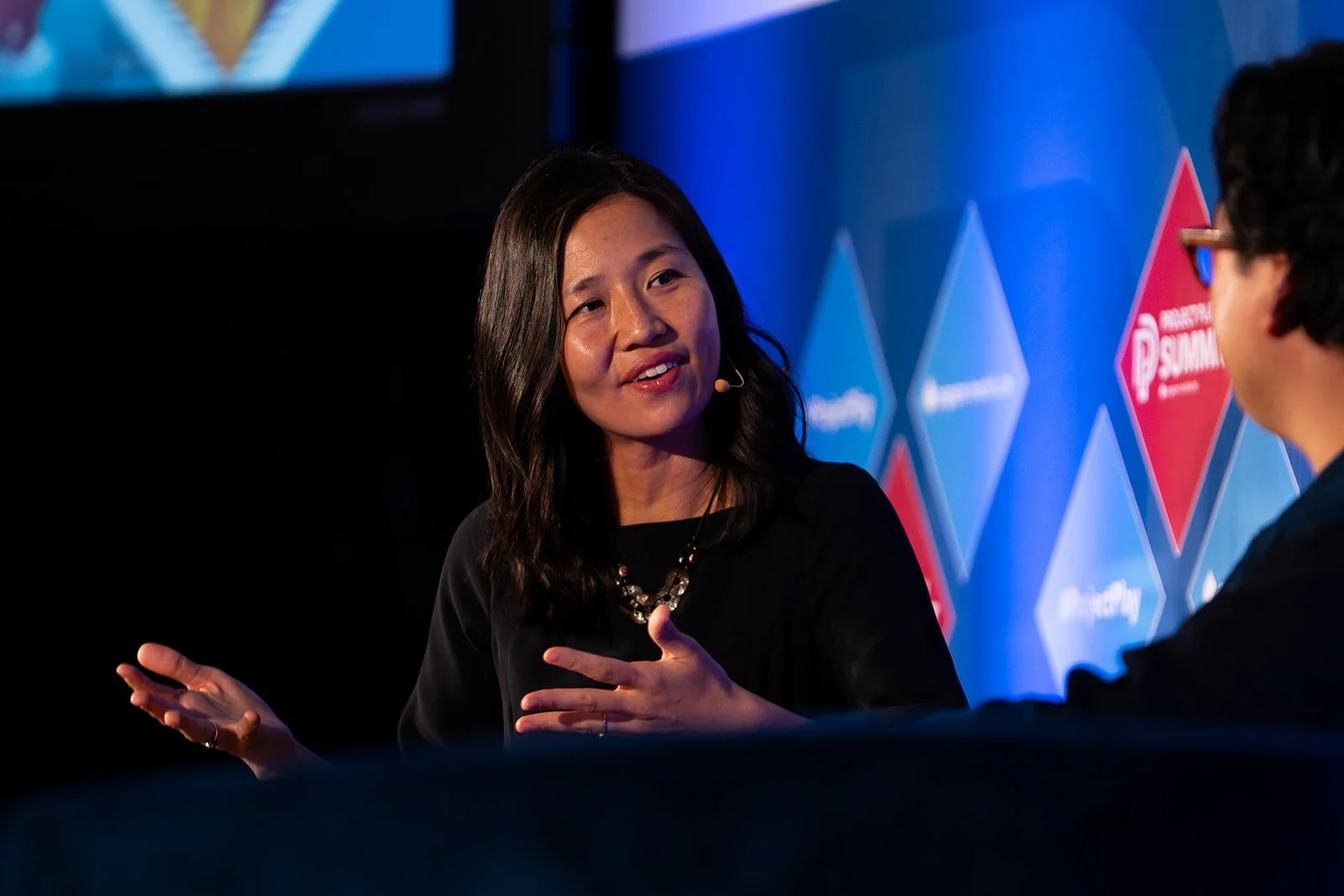
Boston Mayor Michelle Wu celebrated the city’s commitment to youth sports through the Let’s Play Boston initiative. Photo: Mironko Productions for the Aspen Institute
How to build a City of Champions
The question animating the Summit found its most direct expression on Wednesday morning, when Boston Mayor Michelle Wu joined the main stage for a conversation on what municipalities can do to build Sport for All, Play for Life communities.
"We are signing the Children's Bill of Rights when it comes to sports," Wu said. "We are taking down every possible barrier and getting everyone coordinated so we can all be greater than the sum of our parts."
Wu described Boston's Let's Play Boston initiative, a youth sports hub and facilities map designed to connect families to free and low-cost programming across the city. She also highlighted the renovation of White Stadium — the city's only public youth sports facility, now being rebuilt into what she called the best public school athletic facility in the country — and the Mayor's Cup, an annual citywide competition that brings championship rings to winners across every sport, from the youngest players to high school state champions.
The session framed city government not as a backdrop to youth sports but as an active player — one with unique leverage over facilities, permits, funding, and policy. That theme carried through companion sessions on the power of the permit, state-level ecosystem building, and grantmaking — each one a different entry point into the same question of who is responsible for making the system work.
Other Summit highlights
Across the Summit, leaders also introduced new initiatives, research, and partnerships aimed at strengthening youth sports at every level.
Investing in youth voice, families, and development
Breakout sessions dug into what young people and families actually need from sports today. New research explored why kids stay in sports and why they leave. Other sessions focused on parents as enablers of play, with practical tools to help families guide participation — including new Spanish-language resources distributed in partnership with Telemundo, represented by Luis Rosero, Vice President of Corporate & External Affairs, NBCUniversal Telemundo Enterprises.
Connecting sport and art to whole-child development
The Summit also elevated the connection between sport, art, and whole-child development through a featured “Why We Play” session. LJ Rader of Art But Make it Sports and Britt Salvesen of the Los Angeles County Museum of Art explored how to break down the siloes that kids need to choose to identify as either an athlete or an artist, and how early exposure to sport and art together supports confidence, belonging, and whole-child development.
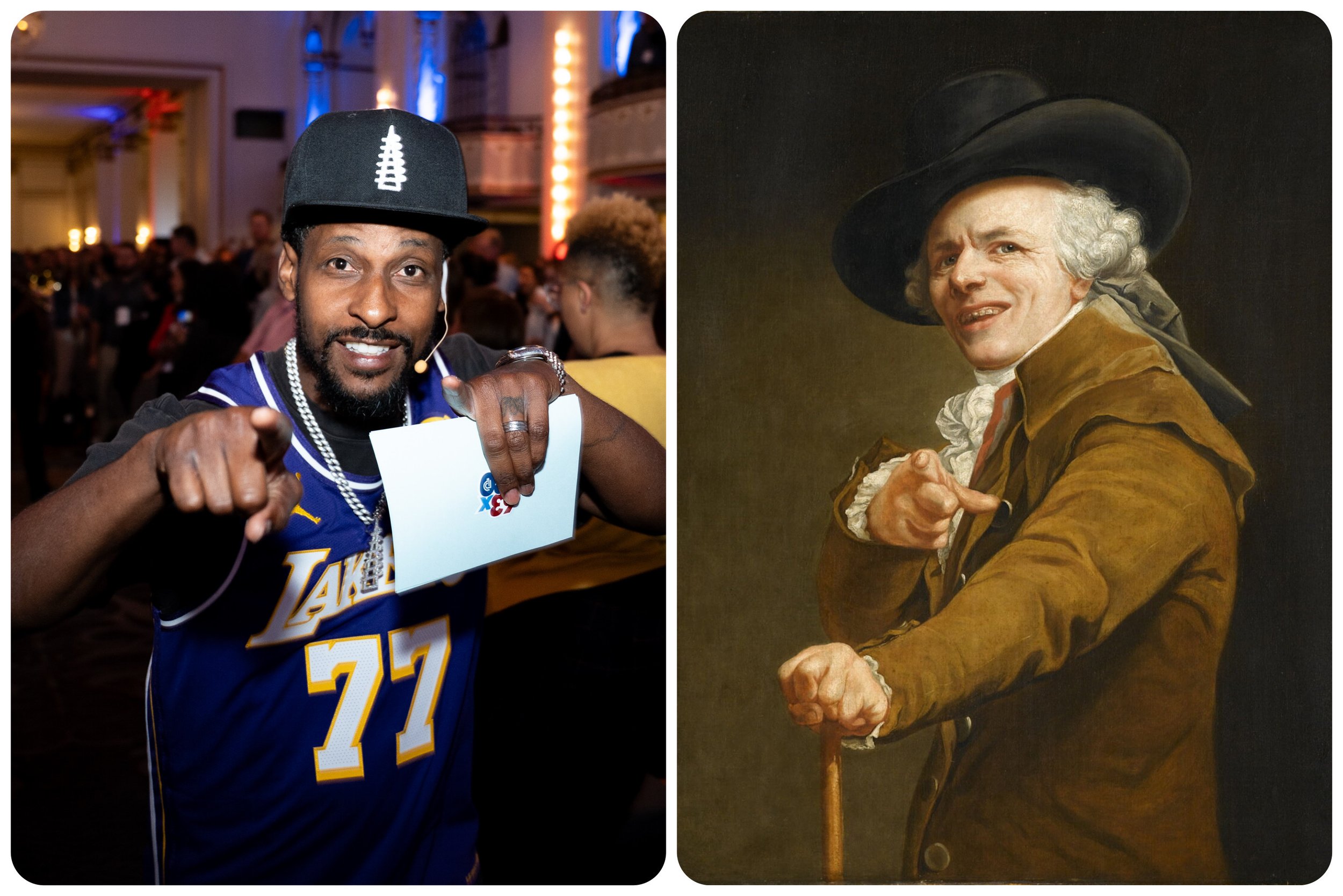
L: Project Play Summit emcee Brandon “Stix” Salaam-Bailey. Photo: Mironko Productions for the Aspen Institute. R: Joseph Ducreux, “Self-Portrait in a Mocking Pose” (c. 1793). Image matching by LJ Rader, @artbutmakeitsports.
Data, investment, and the road to 2026
In a featured conversation, philanthropy leader Laurie Tisch shared findings from the State of Soccer report, pointing to barriers such as cost, transportation, and declining opportunities for free play, along with lower retention among girls. Her foundation has committed $10 million to build a better soccer ecosystem in Greater New York City, including grants to the soccer program South Bronx United and City Parks Foundation’s Girls Forward program.
Advancing health and safety
Leaders in health and safety pointed to progress — and ongoing challenges — in protecting young athletes. Representatives from the U.S. Center for SafeSport and Ankored discussed the next wave of reform aimed at strengthening safeguards across the system, while leaders from the National ACL Injury Coalition shared updates on policies and tools designed to reduce preventable injuries and keep more kids active for life.
At the same time, new research underscored participation gaps that remain. A session on boys in sports explored why participation has declined and what policy and programmatic changes are needed to bring more of them back into the game.
New initiatives and announcements
Additional announcements reflected the continued growth of the movement. Nickelodeon Our World introduced a new cohort of Project Play Champions, recognizing young leaders making an impact in their communities. ESPN launched the second round of its Innovation Challenge, offering $10,000 grants to organizations working to address key challenges in youth sports. Interested organizations can learn more and apply here.
Project Play heads to Milwaukee for 2027
NBA champion Giannis Antetokounmpo announced via video that Project Play Summit 2027 will head to Milwaukee, with Bader Philanthropies serving as the lead local partner. "We've seen what's possible when kids have a place to grow," Antetokounmpo said. "Let's ensure every kid has a chance to play, dream, and build something special." (Join us! Secure your spot by placing your name on our presale list.)
NBA MVP Giannis Antetokounmpo welcomes the Project Play Summit to Milwaukee in 2027.
The above recap covers just a sampling of insights, ideas, and opportunities that emerged from two days of convening in Boston. More content will be shared in the months ahead through Project Play’s newsletter and digital channels.

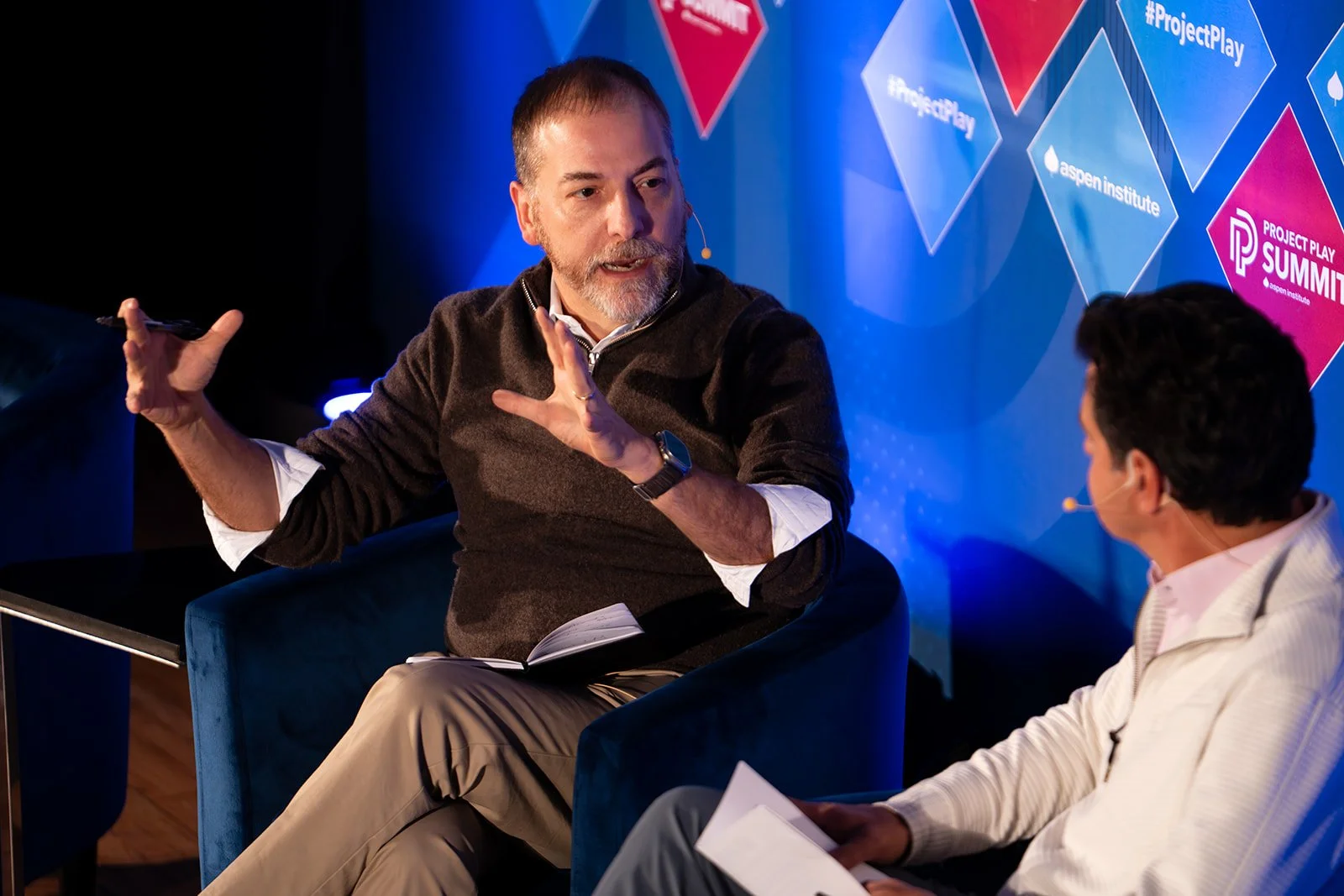

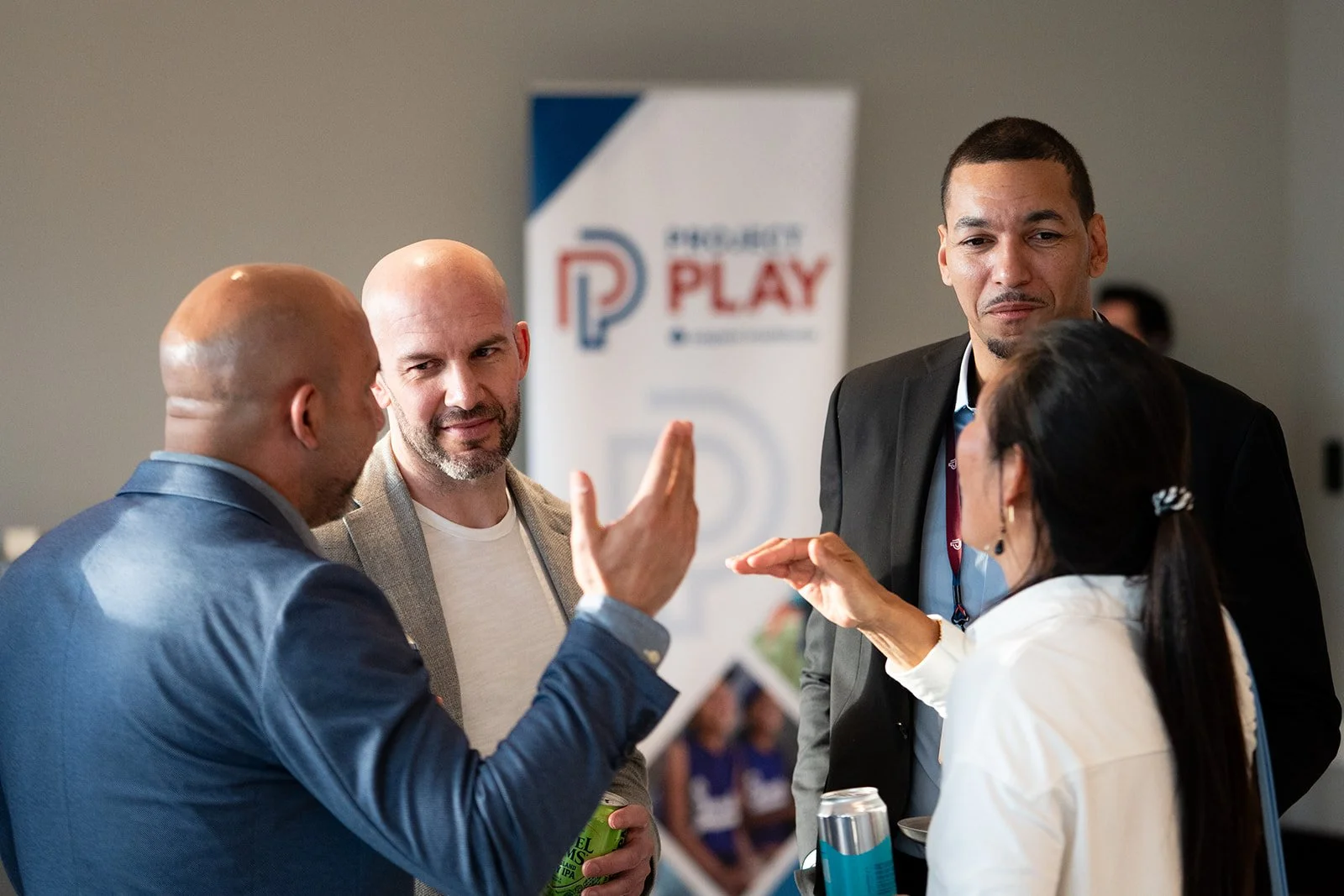
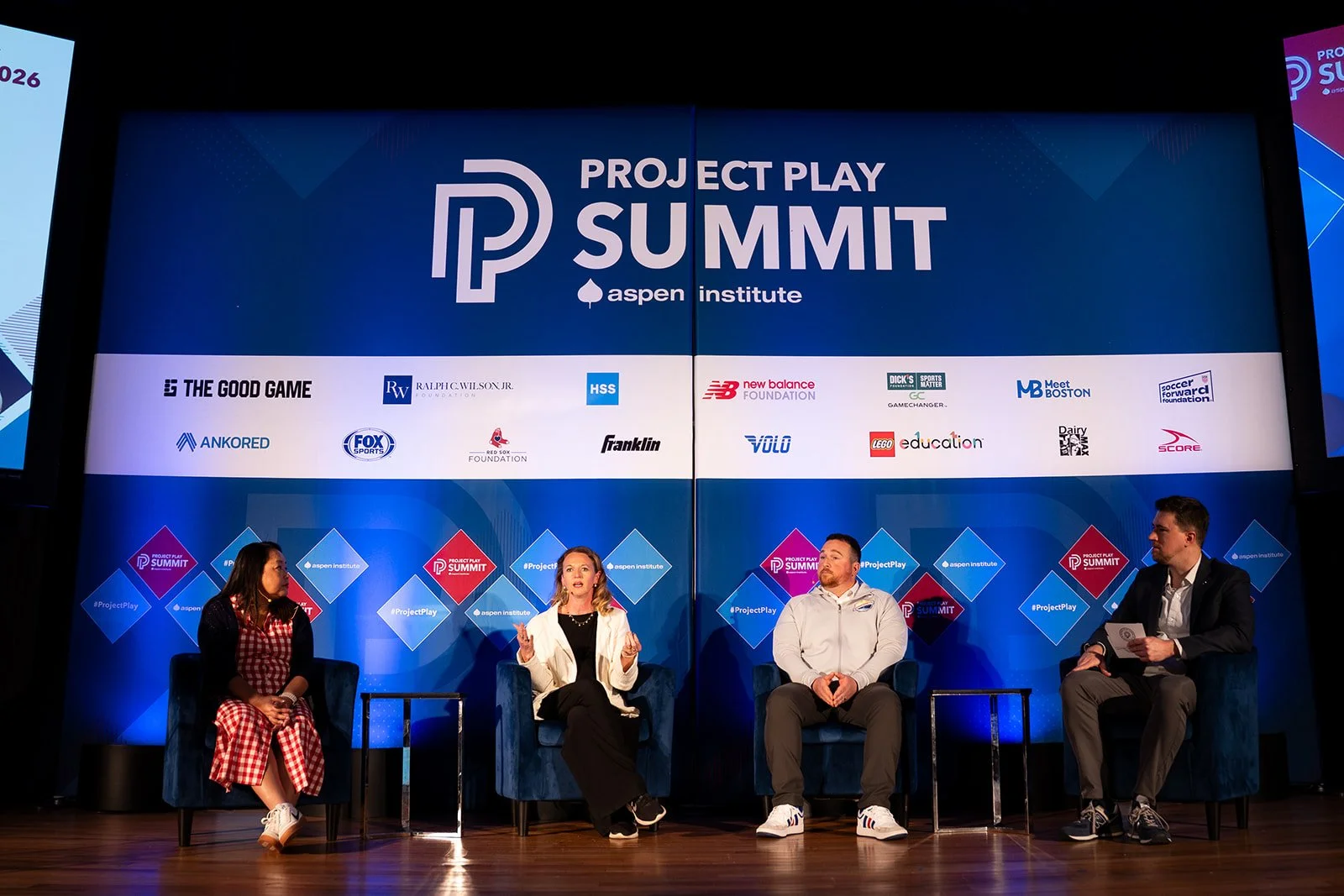
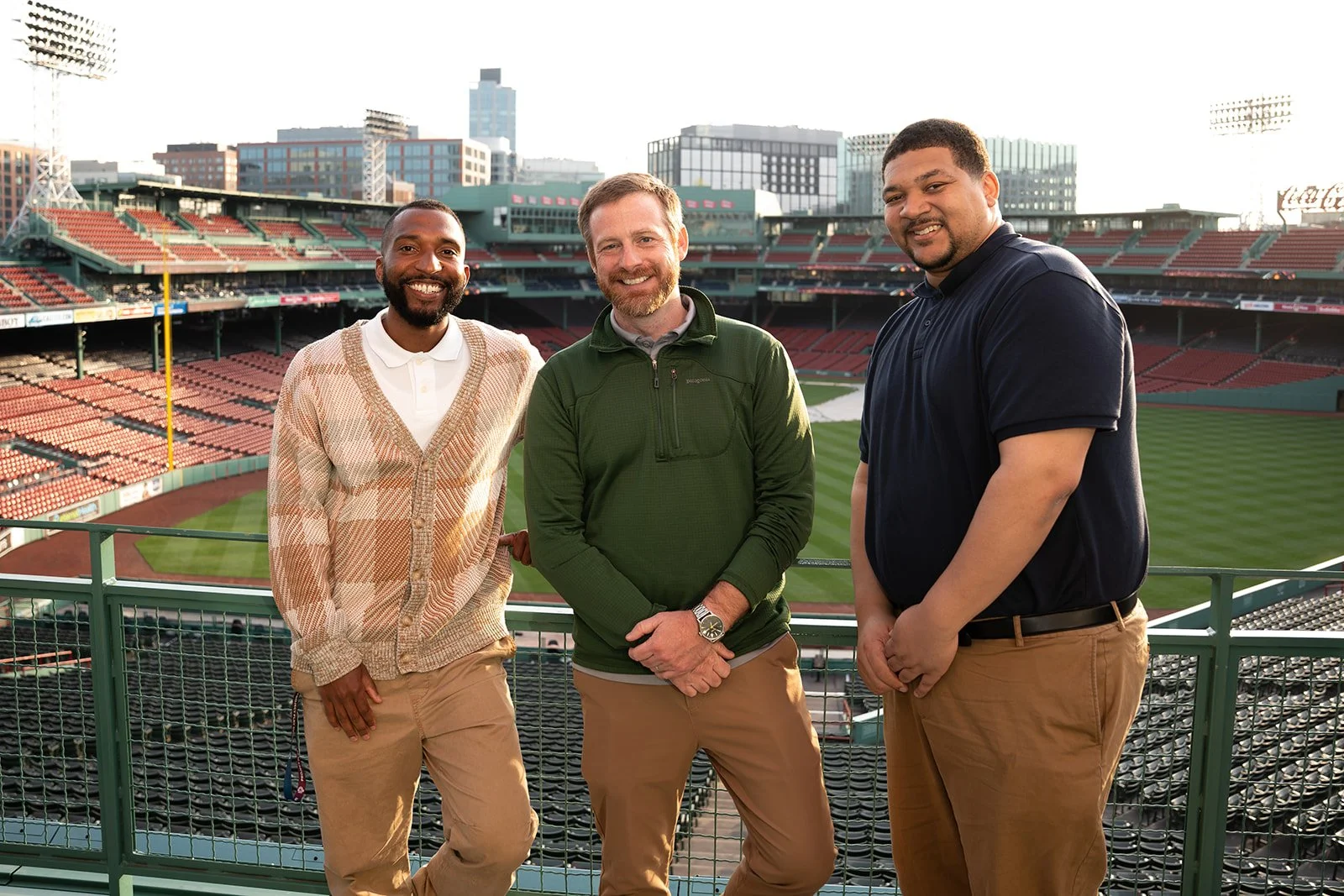

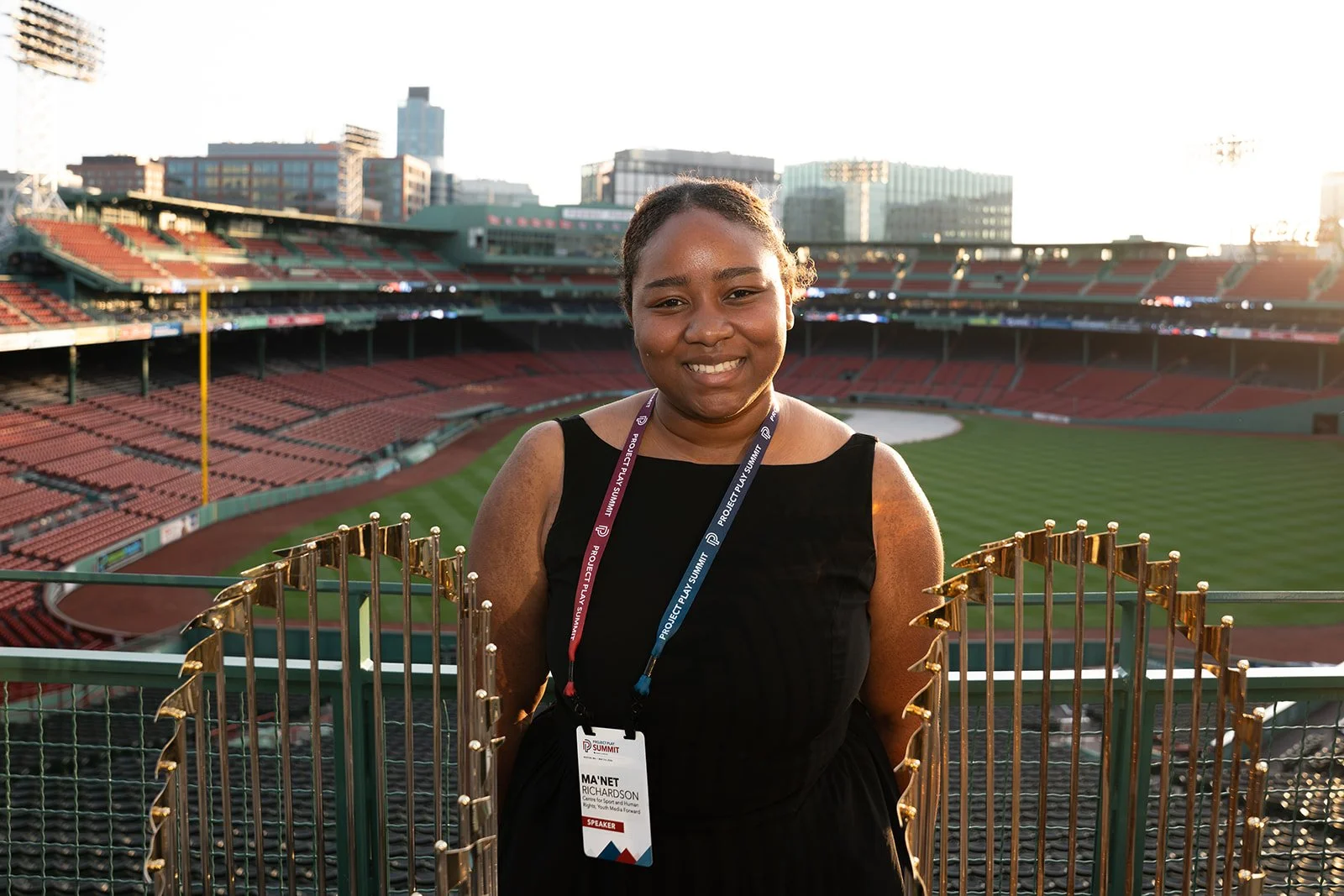

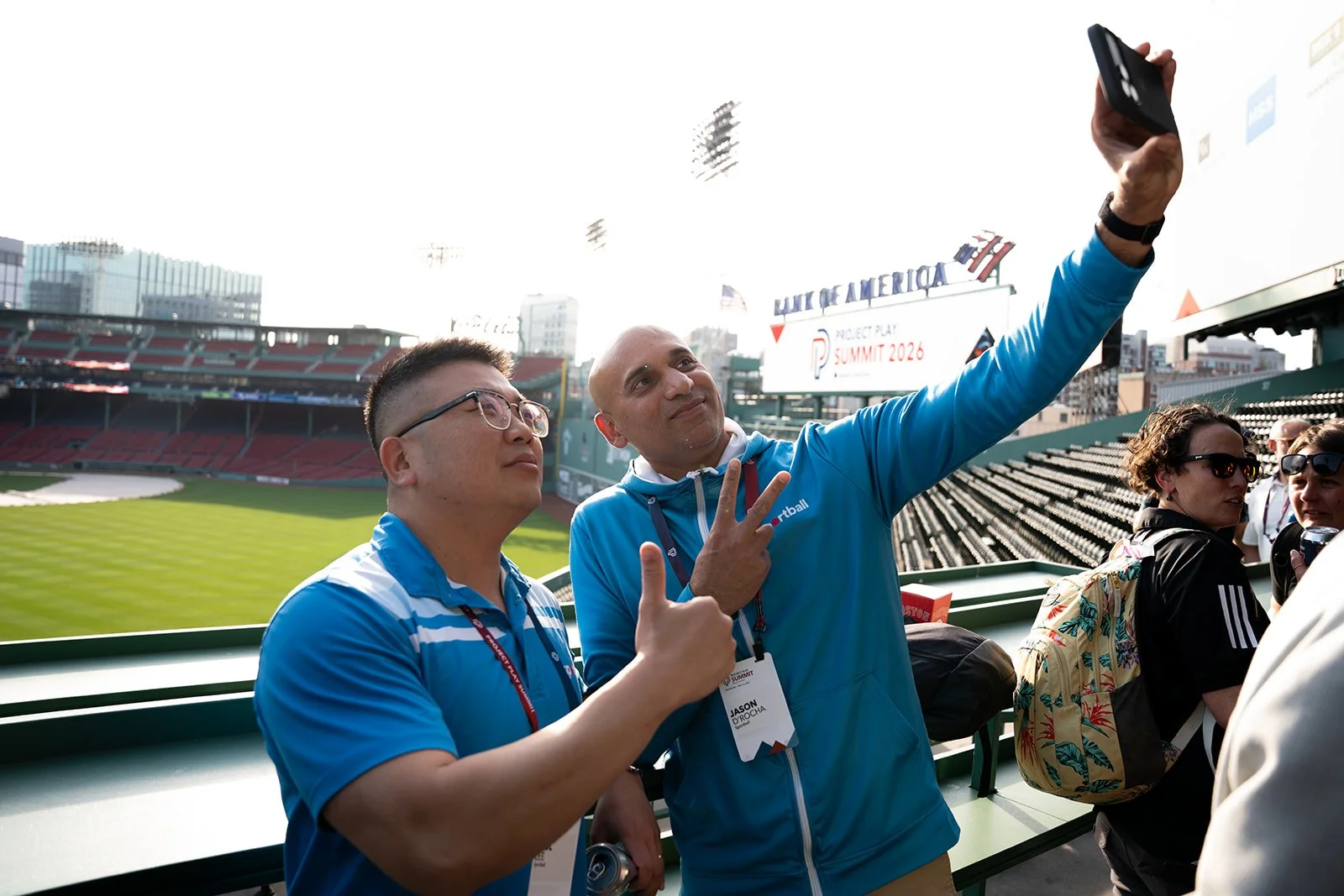
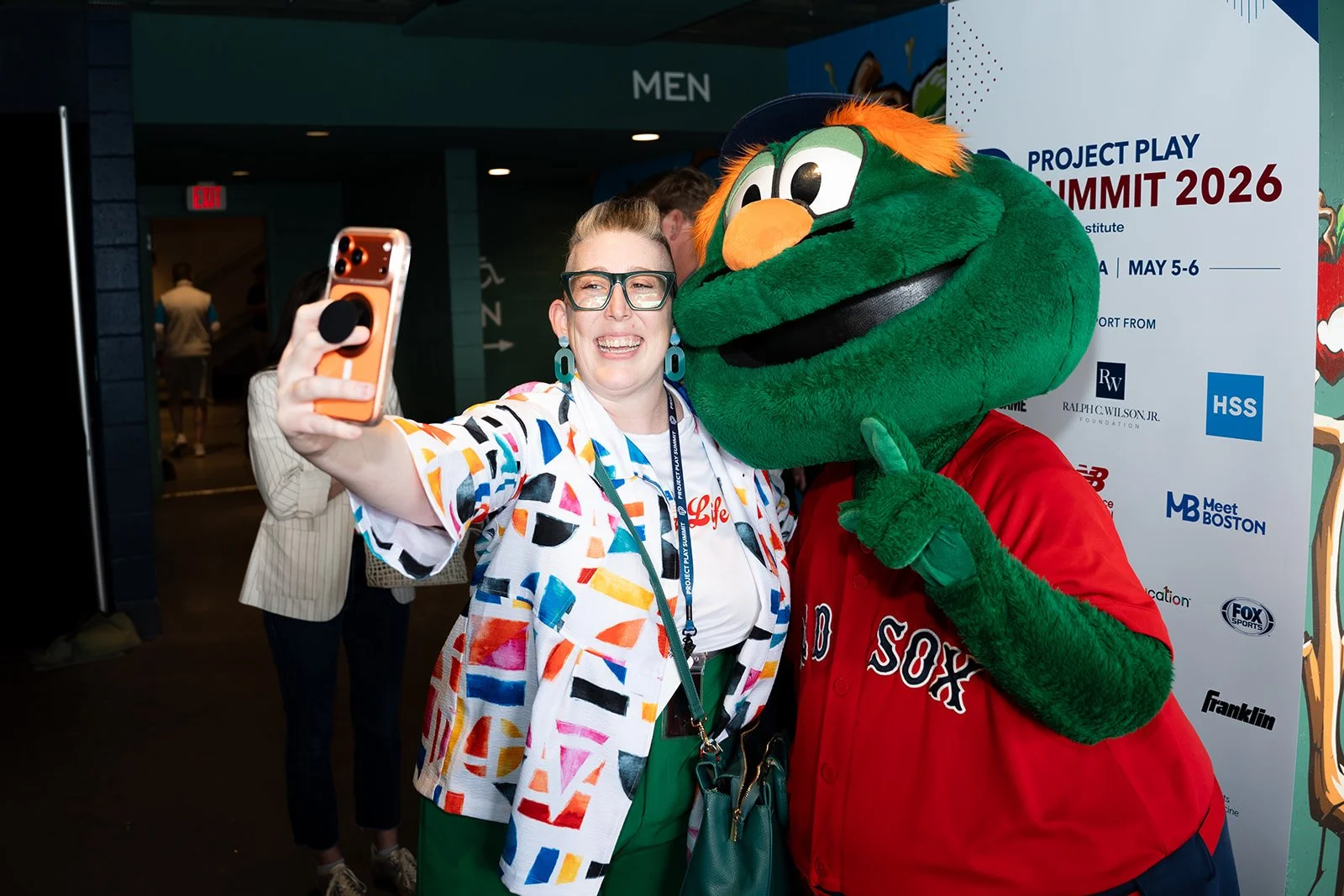
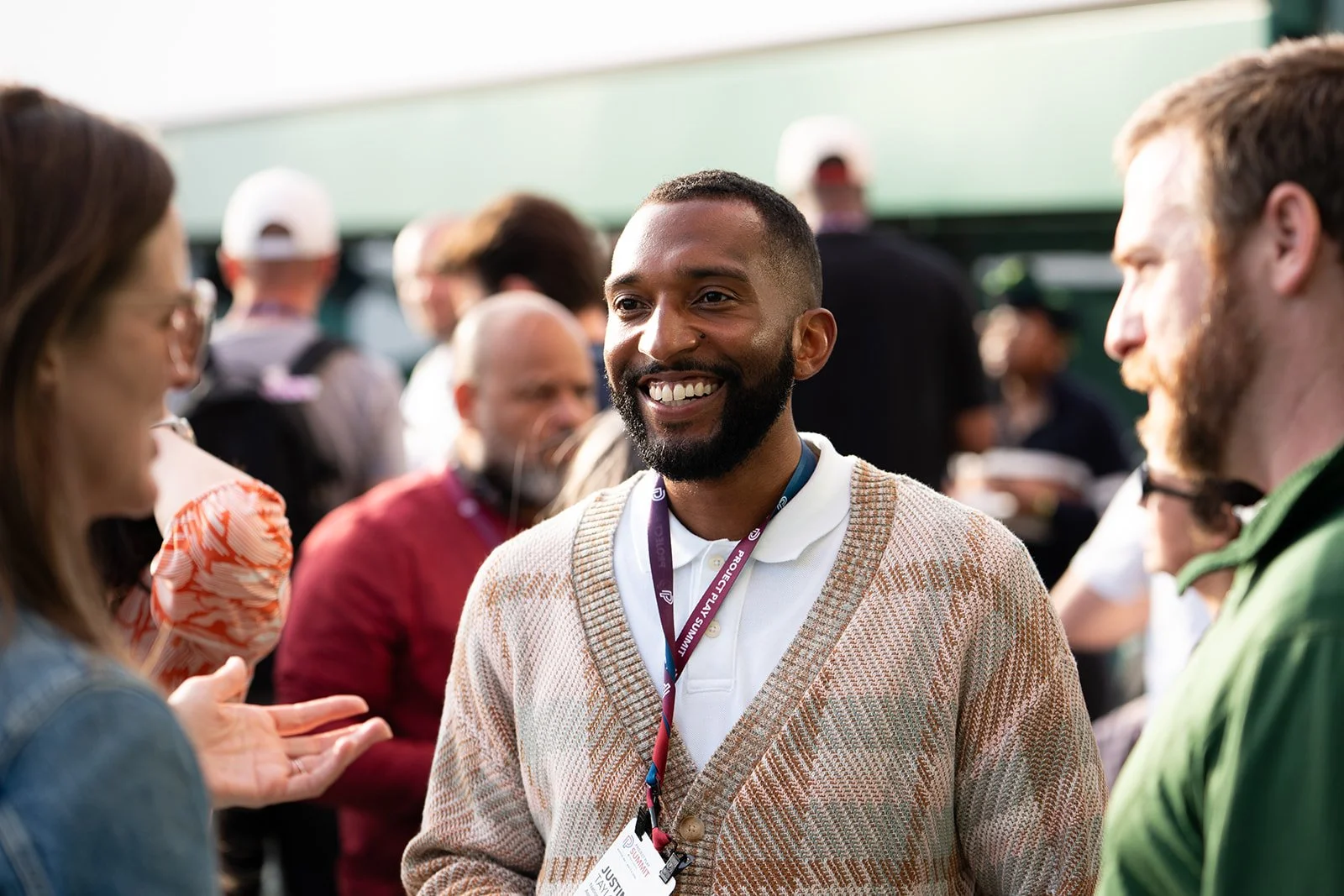
Photo Credit: Mironko Productions for the Aspen Institute
Marty Fox is program manager for the Aspen Institute’s Sports & Society Program, advancing the 63X30 roundtable, the Children’s Bill of Rights in Sports, and other priority projects.
Maya Ovrutsky is the Director of Partner Success for the Aspen Institute’s Creative Services division.